SMEPAL SEO Methodology: How We Help Websites Rank on Google
A transparent look at how we research, optimize, measure, and improve organic search performance
Ranking on Google is not achieved by adding a few keywords to a website and waiting for traffic.
Search visibility is the result of multiple factors working together: technical accessibility, relevant content, search intent, website structure, topical coverage, authority, user experience, local relevance, and continuous optimization.
At SMEPAL, we approach SEO as a structured growth discipline rather than a collection of isolated tactics.
Our methodology brings together SEO strategy, keyword research, search-intent analysis, technical SEO, website optimization, content development, internal linking, authority building, local SEO, performance measurement, and continuous improvement.
We do not promise a specific Google position because no legitimate SEO agency controls Google’s ranking systems. Instead, we focus on improving the factors that can make a website more relevant, useful, accessible, trustworthy, and competitive for the searches that matter to the business.
Google explains that Search involves crawling, indexing, and serving results, with its automated ranking systems evaluating relevance and many other signals when determining which results to show.
Our objective is simple:
Build stronger organic visibility that attracts the right audience and contributes to measurable business growth.
How Our SEO Methodology Works
Our SEO process follows a continuous cycle:
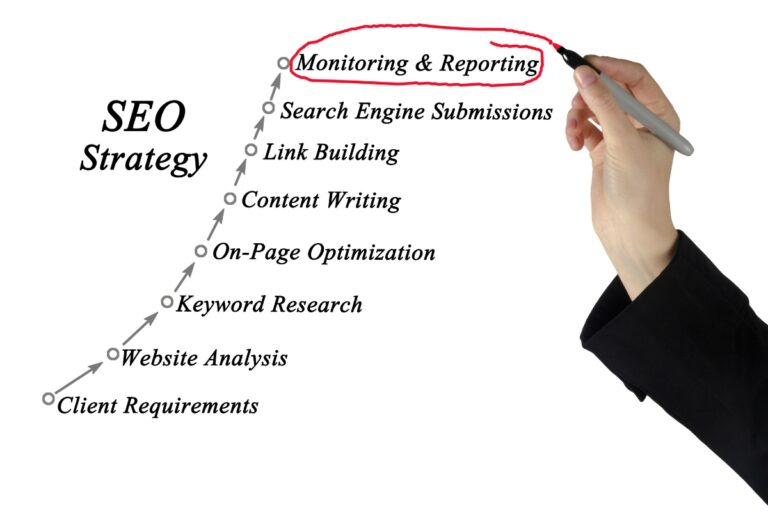
Understand → Research → Audit → Strategize → Optimize → Build → Measure → Improve
We do not treat SEO as a one-time project where optimization ends after a website goes live.
Search behaviour changes. Competitors improve. Websites change. New opportunities emerge. Google continuously updates its systems.
For that reason, our methodology is designed to identify opportunities, implement improvements, measure their impact, and refine the strategy over time.
1. We Start With the Business, Not the Keywords
Before researching keywords, we understand the business we are trying to grow.
SEO only creates commercial value when the traffic it attracts is relevant to the products, services, locations, and customers a business serves.
Our initial analysis considers:
- Business model
- Products and services
- Target customers
- Geographic markets
- Commercial priorities
- Customer needs and pain points
- Buying journey
- Existing website
- Existing organic visibility
- Existing competitors
- Conversion opportunities
- Current marketing activity
This gives us the commercial context required to build an SEO strategy around the business rather than around search volume alone.
Why this matters
A keyword can generate thousands of searches and still be commercially irrelevant.
Another keyword may have considerably less search volume but attract people who are actively looking for the exact service a business provides.
We therefore prioritize search opportunities based on business relevance, intent, competition, and potential value — not search volume alone.
2. We Research the Search Market
Once we understand the business, we investigate the search environment.
Our research identifies the terms, topics, questions, services, products, and locations that potential customers use when searching online.
We examine:
Search demand
How frequently relevant terms and topics are searched.
Search intent
What the person is trying to accomplish with the search.
Commercial relevance
How closely the search relates to the business’s products or services.
Competition
Which websites currently compete for visibility and how strong those results are.
Geographic relevance
Whether a search is local, national, regional, or international.
Conversion potential
Whether ranking for the query can realistically contribute to an enquiry, sale, booking, lead, or another business objective.
The result is not simply a list of keywords.
It is a search opportunity map that helps determine where the website should compete.
3. We Analyse Search Intent
One of the biggest SEO mistakes is creating a page for a keyword without understanding what the searcher actually wants.
The same word can represent very different intentions.
Searchers may be:
- Looking for information
- Comparing options
- Researching a provider
- Looking for a product
- Looking for a service
- Ready to contact a business
- Looking for a business in a particular location
- Trying to complete a specific task
We therefore analyse the actual search results for important target queries.
We examine the pages Google is currently presenting and identify patterns such as:
- Service pages
- Product pages
- Category pages
- Guides
- Comparison content
- Local results
- Location pages
- Other search features
The page we optimize or create must satisfy the underlying intent, not simply contain the target keyword.
Google’s documentation explains that its systems attempt to understand the meaning and intent behind searches and return relevant, useful results.
4. We Audit the Existing Website
Before implementing a large SEO campaign, we need to understand the website’s current condition.
A website can have excellent content and still struggle in organic search because of technical or structural problems.
Our SEO audit can examine:
- Crawlability
- Indexability
- Site architecture
- URL structure
- XML sitemap
- Robots directives
- Canonical URLs
- Redirects
- Broken links
- Duplicate content
- Mobile usability
- Page experience
- Page speed
- Core Web Vitals
- Metadata
- Structured data
- Internal linking
- Orphan pages
- Image optimization
- HTTPS
- Rendering issues
Google identifies crawling and indexing as fundamental parts of how pages become eligible to appear in Search.
Our principle
Do not scale an SEO strategy on top of a weak foundation.
We identify the problems first, prioritize them according to impact, and then determine what should be fixed.
5. We Build a Search-Friendly Website Structure
SEO is also information architecture.
A website should make it easy for visitors and search engines to understand:
- What the business does
- Which services it provides
- Which products it offers
- Which locations it serves
- Which topics it covers
- How its pages relate to one another
We therefore assess the relationship between:
Homepage
↓
Service or product categories
↓
Individual services or products
↓
Supporting content
This structure helps create clearer relationships between important commercial pages and supporting informational content.
We also examine:
- Navigation
- URL hierarchy
- Breadcrumbs
- Internal links
- Content categories
- Topic relationships
- Orphan pages
- Important pages that are buried too deeply
A technically accessible website is not enough.
Its information should also make sense.
6. We Develop a Keyword and Topic Architecture
We do not approach SEO as a process of assigning one keyword to every page.
Instead, we build a broader keyword and topic architecture.
This can involve:
Primary keywords
The main search terms a page is intended to compete for.
Secondary keywords
Closely related variations and supporting search terms.
Topic clusters
Groups of related subjects that strengthen a website’s coverage of an important area.
Commercial topics
Topics directly connected to products, services, locations, or buying decisions.
Supporting topics
Educational subjects that answer customer questions and support the broader commercial strategy.
This approach allows the website to develop meaningful coverage around important areas rather than producing disconnected articles.
7. We Optimize Pages for People and Search Engines
On-page SEO is not simply inserting a focus keyword into a paragraph.
We optimize pages around the topic, intent, structure, usability, and conversion objective.
Depending on the page, optimization can include:
- SEO title
- Meta description
- H1
- H2 and H3 structure
- Keyword targeting
- Topic coverage
- Search-intent alignment
- Content organization
- Internal links
- Relevant external references
- Image optimization
- Alt text
- Structured data where appropriate
- Calls to action
- Conversion elements
The goal is to create a page that clearly answers the searcher’s question or fulfils their objective.
We optimize for relevance and usefulness, not keyword density.
8. We Build Topical Authority Through Strategic Content
Publishing content simply to have a blog is not an SEO strategy.
Every piece of content should have a purpose.
Our content strategy can target:
- Customer questions
- Commercial investigations
- Service-related searches
- Product-related searches
- Industry topics
- Location-based searches
- Comparison searches
- Educational topics
- Long-tail opportunities
- Supporting topics around core services
For example, a business targeting web design services in Kenya could develop supporting content around website costs, WordPress websites, website speed, mobile-friendly websites, website redesign, e-commerce websites, landing pages, and website SEO.
These topics can support the broader commercial subject while giving potential customers useful information at different stages of their buying journey.
The objective
Not more content.
More useful coverage of the topics that matter.
9. We Strengthen Internal Linking
Internal linking is an important part of our SEO methodology.
We strategically connect related pages so users can move naturally through the website and important pages receive appropriate internal support.
For example:
Blog article → Service page
Supporting article → Pillar page
Service category → Individual service
Product category → Product page
Location page → Relevant service
We look for opportunities to improve:
- Contextual internal links
- Anchor text
- Page relationships
- Important-page accessibility
- Orphan pages
- Internal authority distribution
Internal links should help users discover the next useful piece of information — not simply exist for SEO purposes.
10. We Improve Website Experience and Performance
Search visibility and website performance should work together.
A website that attracts visitors but provides a poor experience creates a weak foundation for digital growth.
Depending on the project, we assess:
- Mobile experience
- Page loading performance
- Navigation
- Readability
- Content layout
- Intrusive elements
- Conversion paths
- Forms
- Calls to action
- Technical performance
- Core Web Vitals
We also consider how easily visitors can move from:
Search → Page → Information → Trust → Action
The objective is not merely to attract organic visitors.
It is to make the website capable of converting relevant visitors into business opportunities.
11. We Strengthen Authority and Off-Page Signals
A website’s SEO performance does not exist entirely within its own pages.
Depending on the market, competition, and objectives, our strategy may include activities designed to strengthen external authority and brand visibility.
These can include:
- Relevant backlinks
- Digital PR
- Industry directories
- Business citations
- Partner websites
- Brand mentions
- Industry contributions
- Local references
- Other relevant off-page activities
We prioritize relevance, quality, credibility, and context rather than pursuing large numbers of low-quality links.
Our objective is to build a stronger digital footprint around the business.
12. We Use Local SEO Where Geography Matters
For businesses serving specific locations, local search can represent a significant source of commercial opportunity.
Our local SEO strategy can include:
- Google Business Profile optimization
- Local landing pages
- Location-specific service pages
- Business information consistency
- Local citations
- Local content
- Review and reputation considerations
- Geographic keyword research
- Local relevance signals
For example, a business targeting Kenya may need a different strategy from one targeting Nairobi, Ruiru, Mombasa, Kisumu, or an international market.
Location is not simply added to a keyword. It becomes part of the search strategy.
13. We Measure What Happens After Optimization
SEO should be measurable.
However, rankings alone do not tell the complete story.
We monitor multiple layers of performance.
Visibility
- Search impressions
- Organic visibility
- Ranking keyword growth
- Search presence
Rankings
- Target keyword positions
- Top 10 keywords
- Page-one rankings
- Ranking movement
- New ranking opportunities
Traffic
- Organic sessions
- Organic users
- Landing-page performance
- Traffic growth
- Traffic quality
Engagement
- User behaviour
- Engagement with important pages
- Conversion-path activity
Business outcomes
Where appropriate and measurable:
- Enquiries
- Calls
- Form submissions
- Bookings
- Leads
- Sales
- Other defined conversions
This distinction matters.
More traffic is not automatically better SEO.
The objective is to attract traffic that has commercial relevance.
14. We Use Search Console and Analytics Data to Find Opportunities
Performance data does more than prove that SEO work has been completed.
It tells us what to improve next.
We look for opportunities such as:
High impressions, low clicks
A page may be visible but have a weak search-result presentation.
Page-two rankings
A page already has visibility and may have an opportunity to move closer to the top results.
Unexpected ranking queries
Google may already associate a page with valuable topics that were not originally targeted.
Declining pages
A previously successful page may require investigation and improvement.
High-performing topics
Successful topics can reveal opportunities for additional content and commercial pages.
Underperforming commercial pages
A service or product page may require stronger intent alignment, content, structure, internal linking, or conversion elements.
This turns SEO into an ongoing data-driven optimization process.
15. We Monitor Competitors
Your website does not rank in isolation.
Other businesses are competing for the same search visibility.
We therefore analyse relevant competitors to understand:
- Which keywords they target
- Which pages attract visibility
- What topics they cover
- Their content depth
- Their website structure
- Their internal linking
- Their local presence
- Their authority signals
- Their content gaps
- Their potential weaknesses
The objective is not to copy competitors.
It is to understand the competitive search landscape and identify where your business can build an advantage.
16. We Continuously Improve the Strategy
SEO is an iterative process.
Our methodology follows:
Research
↓
Implementation
↓
Measurement
↓
Analysis
↓
Optimization
↓
Reassessment
↓
Repeat
A page that performs well today may face stronger competition tomorrow.
A topic that was previously low priority may become commercially important.
A page ranking on the second page may become a high-value optimization opportunity.
A technical issue may emerge after a website update.
This is why ongoing SEO requires active monitoring rather than a set-and-forget approach.
17. How We Investigate Ranking Drops
A ranking decline does not automatically mean that an SEO campaign has failed.
First, we investigate.
Our analysis can consider:
- Google algorithm and ranking-system changes
- Competitor improvements
- Changes in search intent
- Content quality
- Technical problems
- Indexing issues
- Lost or changed links
- Internal-link changes
- Website migrations
- Search-demand changes
- SERP feature changes
- Changes to the affected page
We then determine what evidence supports the likely cause before recommending corrective action.
We do not respond to every ranking fluctuation with unnecessary changes.
18. What SMEPAL Does Not Promise
We do not promise guaranteed #1 rankings.
Google controls its organic search results.
No SEO agency can legitimately guarantee a specific organic position.
We do not sell shortcuts.
Sustainable organic visibility is built through research, optimization, useful content, technical improvements, authority, and continuous refinement.
We do not measure SEO by traffic alone.
Traffic without commercial relevance can have limited value.
We do not recommend keyword stuffing.
Repeating a keyword excessively does not create a better user experience.
We do not treat SEO as a one-time task.
Search competition and websites continuously change.
We do not hide behind vanity metrics.
Our reporting should help answer:
What improved?
What changed?
Why did it change?
What opportunities have we identified?
What are we doing next?
Transparency is part of our methodology.
19. How We Report SEO Performance
Our reporting is designed to make SEO understandable and actionable.
Depending on the campaign, reports can include:
Work completed
What was implemented during the reporting period.
Ranking performance
How priority keywords and keyword groups have moved.
Organic visibility
How search impressions and visibility have changed.
Traffic
How organic traffic is performing.
Landing pages
Which pages are generating search visibility and visits.
Opportunities
What new opportunities have emerged from the data.
Conversions
What organic search activity is contributing to enquiries, leads, bookings, sales, or other defined goals.
Next priorities
What should be addressed next and why.
The objective is not to overwhelm clients with numbers.
It is to turn SEO data into business intelligence.
20. The SMEPAL SEO Framework
Our methodology can be summarized in ten stages:
01 — Business Intelligence
Understand the business, audience, market, objectives, and commercial priorities.
02 — Search Intelligence
Research keywords, topics, search intent, demand, and competition.
03 — Technical Foundation
Identify and resolve technical barriers affecting crawling, indexing, performance, and usability.
04 — Website Architecture
Build logical relationships between important commercial and informational pages.
05 — On-Page Optimization
Improve pages around search intent, relevance, usability, structure, and conversion.
06 — Content Strategy
Develop useful, strategically connected content around commercially relevant topics.
07 — Authority Building
Strengthen relevant external signals and brand visibility.
08 — Local SEO
Improve local search visibility where geographic relevance matters.
09 — Measurement
Track rankings, visibility, traffic, engagement, and business outcomes.
10 — Continuous Improvement
Use performance data and market changes to refine the strategy.
Our SEO Philosophy
We do not chase rankings. We build search visibility.
A ranking is a position.
Visibility is the opportunity to be discovered.
Traffic is the resulting attention.
Conversions are the business outcome.
Our SEO methodology connects all four.
We therefore approach SEO with a broader objective:
Help the right people discover the right business through the searches that matter.
That requires more than keywords.
It requires a technically sound website, relevant content, clear information architecture, strong search-intent alignment, credible authority, useful user experiences, and continuous optimization.
Why We Make Our Methodology Public
SEO is often difficult for business owners to evaluate.
Agencies can promise first-page rankings, present impressive screenshots, or provide reports filled with numbers without explaining what actually happens behind the scenes.
We believe clients deserve more transparency.
That is why we make our methodology public.
You should understand:
- What your SEO agency is researching
- Why particular keywords are targeted
- Why pages are being created or changed
- What technical issues are being addressed
- How content decisions are made
- How performance is measured
- How opportunities are identified
- How problems are investigated
- What SEO can realistically achieve
Our methodology is not a secret formula. It is a structured process.
The competitive advantage comes from how effectively that process is applied to your business, market, website, competition, and objectives.
SEO That Connects Search Visibility With Business Growth
At SMEPAL, we combine SEO, website development, content, digital marketing, and business-focused strategy to help organizations build stronger digital channels.
Our SEO work is designed to support the broader customer journey:
Search → Discovery → Website → Trust → Enquiry → Conversion → Growth
The ultimate objective is not to make a ranking report look impressive.
It is to build an organic search presence that can continue generating relevant visibility and business opportunities over time.
Ready to Build a Stronger Organic Search Presence?
If your website is not generating the visibility, enquiries, or opportunities you expect from Google, the first step is understanding what is holding it back.
Talk to SMEPAL about your SEO strategy.
Let’s assess your website, search market, competitors, and growth opportunities — then develop an SEO strategy built around your business objectives.
[Request an SEO Consultation]
[Explore Our SEO Services]
Frequently Asked Questions
Can SMEPAL guarantee that my website will rank #1 on Google?
No. No legitimate SEO agency controls Google’s organic ranking systems or can guarantee a specific position. SMEPAL focuses on improving the technical, content, structural, relevance, authority, and user-experience factors that can strengthen a website’s ability to compete in organic search.
How long does SEO take to produce results?
There is no universal timeline. Results depend on factors including the website’s starting condition, competition, search demand, industry, authority, content quality, technical foundation, and the scope of implementation.
Do you focus only on Google rankings?
No. Rankings are one measurement within a broader SEO framework. We also consider organic visibility, impressions, clicks, traffic, landing-page performance, enquiries, leads, bookings, sales, and other defined business outcomes.
Do you provide SEO for businesses in Kenya?
Yes. SMEPAL provides digital marketing and SEO-focused services for businesses targeting Kenya as well as businesses with broader market ambitions.
Do you work with existing websites?
Yes. SEO can be implemented on an existing website through technical audits, content optimization, site-structure improvements, keyword strategy, internal linking, content development, authority building, local SEO, and continuous performance optimization.
Can you help if my rankings have dropped?
Yes. We can investigate potential causes including technical issues, indexing changes, competitor activity, content problems, search-intent changes, website changes, and changes in the search landscape before determining the appropriate response.
Do you use SEO tools?
SEO requires data and analysis. Depending on the project, we use relevant search, analytics, technical auditing, keyword research, rank tracking, and website analysis tools to investigate performance and identify opportunities.
What makes SMEPAL’s SEO methodology different?
Our approach connects SEO activity to business objectives. Rather than treating keyword rankings as the final goal, we combine search strategy, technical SEO, content, website optimization, authority, measurement, and continuous improvement to build a broader organic growth strategy.
Our Standard
Research before assumptions.
Strategy before execution.
Relevance before volume.
Quality before shortcuts.
Data before guesswork.
Business outcomes before vanity metrics.
Continuous improvement before complacency.
That is the SMEPAL approach to SEO.