How Marketing Automation Helps Businesses Generate More Leads and Increase Revenue
Search-driven customer journeys are becoming increasingly complex as businesses manage more digital interactions across websites, email, social platforms, search engines, and other online channels. At the same time, manually managing lead capture, follow-ups, segmentation, and customer communication can create delays, inconsistent experiences, fragmented data, and missed revenue opportunities. Marketing automation for businesses provides a structured way to streamline repetitive marketing activities, personalize customer interactions, improve lead management, and connect marketing performance with commercial outcomes. As businesses compete for attention and qualified customers, effective automation can help improve lead generation, conversion, operational efficiency, customer engagement, and measurable revenue growth.
Overview of Contents
ToggleWhy Marketing Automation for Businesses Is Important for Growth
Businesses need efficient systems to manage prospects and customers as digital interactions increase across the buying journey. Marketing automation for businesses helps organizations coordinate lead generation, nurturing, personalization, and performance tracking while reducing unnecessary manual work. These benefits make automation an important growth tool for businesses seeking stronger marketing performance and revenue outcomes:
1. Marketing Automation for Businesses Improves Lead Generation
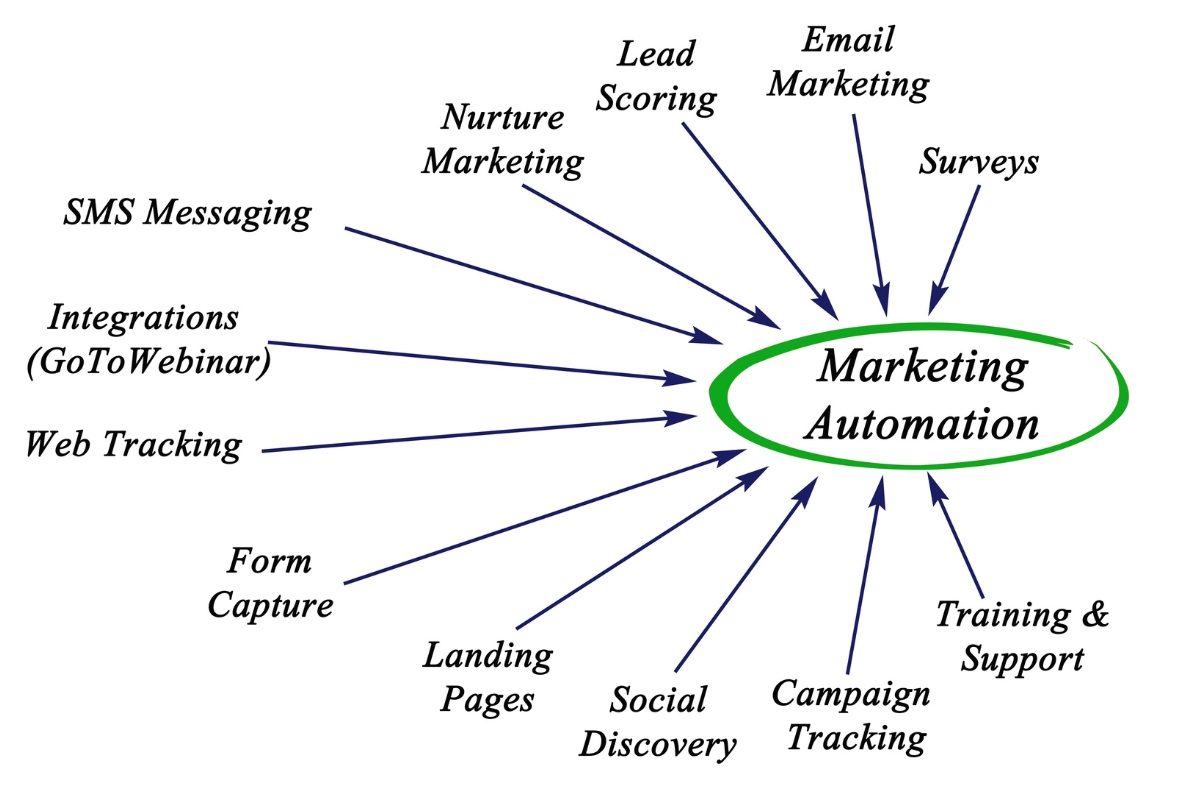
Marketing automation helps businesses capture potential customers through forms, landing pages, website interactions, campaigns, and other digital touchpoints. Automated systems can organize new leads, record relevant information, and trigger appropriate follow-up actions without requiring teams to manage every interaction manually. This allows businesses to handle larger volumes of prospects while maintaining more consistent lead management processes. A stronger lead capture system can create more opportunities for qualified prospects to enter the sales pipeline.
2. Marketing Automation Helps Businesses Nurture Leads More Effectively
Not every prospect is ready to purchase immediately, making consistent lead nurturing essential for businesses with longer or more complex buying journeys. Automated email sequences, educational content, reminders, and personalized follow-ups can keep prospects engaged while gradually moving them toward a purchasing decision. Businesses can also trigger different communications based on actions such as content downloads, website visits, email engagement, or form submissions. Effective nurturing helps businesses maintain relationships with potential customers until they demonstrate stronger buying intent.
3. Marketing Automation Improves Marketing and Sales Alignment
Marketing and sales teams can lose valuable opportunities when they use different lead definitions, operate with incomplete information, or fail to communicate effectively. Marketing automation can provide sales teams with information about lead sources, engagement levels, content interactions, and other qualification signals that help determine when a prospect is ready for sales attention. Automated lead routing and notification workflows can also reduce delays between marketing engagement and sales follow-up. Better coordination creates a smoother handoff process and gives both teams a stronger foundation for improving conversion performance.
4. Marketing Automation Creates More Personalized Customer Experiences
Customers increasingly expect businesses to provide relevant information rather than generic messages that ignore their interests and previous interactions. Marketing automation allows businesses to segment audiences according to characteristics, behavior, interests, lifecycle stages, and engagement patterns. These insights can then support more relevant emails, content recommendations, offers, and follow-up communications. Personalized experiences can strengthen engagement and help businesses build more meaningful relationships with potential and existing customers.
5. Marketing Automation Increases Marketing Efficiency
Marketing teams often spend significant time performing repetitive activities such as sending follow-up emails, updating customer records, assigning leads, scheduling campaigns, and generating routine reports. Automation can handle many of these tasks according to predefined rules, allowing teams to spend more time on strategy, creative development, analysis, and customer-focused initiatives. Standardized automated workflows can also reduce inconsistencies and minimize errors caused by repetitive manual work. As a result, businesses can improve marketing productivity while managing campaigns and customer interactions more efficiently.
6. Marketing Automation Supports Measurable Revenue Growth
Marketing performance becomes more valuable when businesses can connect campaigns and customer interactions with meaningful commercial outcomes. Marketing automation platforms can help track lead sources, engagement, qualification, conversions, customer acquisition, and other performance indicators across the customer journey. Businesses can use this information to identify which campaigns and workflows contribute to stronger opportunities and revenue generation. Connecting automation data with business outcomes enables more informed investment decisions and creates a clearer path toward measurable, sustainable growth.
What Opportunities Can Businesses Unlock Through Marketing Automation for Businesses?
Marketing automation can help businesses turn fragmented marketing activities into coordinated systems that support lead generation, engagement, conversion, and customer retention. When implemented strategically, marketing automation for businesses can create more efficient customer journeys while giving teams better visibility into campaign and revenue performance. The following opportunities show how businesses can use automation to strengthen marketing performance and support sustainable growth:
1. Marketing Automation for Businesses Creates More Scalable Lead Generation
Explain how automated lead capture systems, forms, landing pages, campaigns, and digital channels can help businesses generate and manage larger volumes of prospects without relying entirely on manual processes.
2. Automated Lead Nurturing Can Increase Conversion Opportunities
Discuss how personalized workflows, email sequences, content delivery, and timely follow-ups can keep prospects engaged and move qualified leads closer to purchasing decisions.
3. Behavioral Data Enables More Personalized Customer Engagement
Explain how businesses can use website activity, email interactions, content engagement, purchase history, and other behavioral signals to deliver more relevant customer experiences.
4. Marketing Automation Can Improve Customer Retention and Repeat Sales
Discuss how automated onboarding, follow-ups, loyalty campaigns, product recommendations, renewal reminders, and customer engagement workflows can strengthen relationships after the initial purchase.
5. Automation Creates More Opportunities for Cross-Selling and Upselling
Explain how customer data and lifecycle information can help businesses identify relevant opportunities to recommend complementary products, premium services, upgrades, or additional solutions.
6. Marketing Automation Improves Campaign Scalability Across Multiple Channels
Discuss how businesses can coordinate email, website, advertising, social media, SMS, and other marketing activities through connected automated workflows.
7. Marketing Automation Provides Better Visibility Into Marketing Performance
Explain how centralized reporting and campaign tracking can help businesses understand lead sources, engagement, conversions, customer acquisition costs, and revenue contribution.
8. Automated Marketing Processes Can Reduce Customer Acquisition Costs
Show how efficient workflows, improved lead qualification, faster follow-up, and better targeting can help businesses use marketing resources more effectively and improve the efficiency of customer acquisition.
9. Marketing Automation Supports More Consistent Customer Journeys
Explain how standardized workflows can ensure prospects and customers receive relevant communication at appropriate stages without relying on individual team members to manage every interaction manually.
10. Marketing Automation Creates Opportunities for Continuous Revenue Growth
Discuss how businesses can use performance data, testing, segmentation, and workflow optimization to continuously improve lead generation, conversion, retention, and revenue performance.
What Major Marketing Automation Trends Will Shape Business Growth in 2026 and Beyond?
Marketing automation is evolving as businesses adopt artificial intelligence, predictive analytics, personalization, and increasingly connected customer data platforms. These developments are changing how businesses attract prospects, manage customer relationships, and optimize marketing performance across digital channels. The following trends are expected to influence marketing automation and business growth in the years ahead:
1. AI-Powered Marketing Automation Is Improving Campaign Optimization
Discuss how artificial intelligence can support content creation, audience segmentation, lead scoring, campaign optimization, customer insights, and automated decision-making.
2. Predictive Analytics Is Improving Lead Qualification and Customer Targeting
Explain how businesses can use historical and behavioral data to identify prospects most likely to convert, purchase again, or respond to specific campaigns.
3. Hyper-Personalization Is Becoming More Important for Customer Engagement
Discuss how businesses are moving beyond basic demographic segmentation toward personalized experiences based on behavior, preferences, lifecycle stage, purchase history, and intent.
4. First-Party Customer Data Is Becoming More Valuable
Explain why businesses are increasingly relying on data collected directly through websites, CRM systems, forms, purchases, email engagement, and customer interactions to support personalized automation.
5. Omnichannel Marketing Automation Is Creating More Connected Customer Journeys
Discuss how businesses can coordinate communication across email, SMS, social media, websites, advertising platforms, and other channels to create consistent customer experiences.
6. AI-Driven Lead Scoring Is Strengthening Sales and Marketing Alignment
Explain how AI-powered scoring models can evaluate multiple customer signals and help sales teams prioritize prospects based on engagement, intent, and conversion potential.
7. Privacy and Data Governance Are Becoming Central to Marketing Automation
Discuss the importance of responsible customer data collection, consent management, security, transparency, and compliance as businesses expand automated personalization.
8. Revenue-Focused Automation Is Connecting Marketing Activity With Commercial Outcomes
Explain how businesses are increasingly measuring automation through qualified leads, conversions, customer acquisition costs, retention, revenue contribution, and return on marketing investment rather than activity alone.
What Opportunities Can Businesses Unlock Through Marketing Automation for Businesses?
Marketing automation is creating new opportunities for businesses to generate leads, nurture prospects, improve customer engagement, and scale marketing activities more efficiently. When implemented strategically, marketing automation for businesses can connect customer data, campaigns, and workflows to create more consistent experiences and stronger commercial outcomes. The following opportunities show how businesses can use automation to improve marketing performance and support sustainable growth:
1. Marketing Automation Can Increase Lead Generation Capacity
Automated lead capture systems can help businesses collect prospects through forms, landing pages, websites, campaigns, and other digital channels while reducing manual administration. Automated workflows can immediately organize and route new leads according to source, interests, behavior, or lifecycle stage. This allows marketing teams to manage larger volumes of prospects without increasing manual workload at the same rate. A scalable lead generation system can create more opportunities for businesses to expand their customer base and revenue pipeline.
2. Automated Lead Nurturing Can Improve Conversion Rates
Not every prospect is ready to purchase immediately, making consistent lead nurturing important for maintaining engagement throughout the buying journey. Automated email sequences, educational content, reminders, and personalized follow-ups can deliver relevant information based on where prospects are in the decision-making process. Businesses can use behavioral triggers to adjust communication when prospects open emails, visit important pages, download resources, or demonstrate stronger purchase intent. Timely and relevant nurturing can help businesses move more qualified prospects toward conversion while reducing the risk of leads being forgotten.
3. Marketing Automation Can Improve Customer Retention and Engagement
Marketing automation can continue supporting customers after the initial conversion through onboarding, follow-up communication, educational resources, product updates, and customer engagement campaigns. Automated workflows can remind customers about renewals, encourage product usage, request feedback, and provide relevant information based on customer activity. Consistent communication helps businesses maintain relationships without requiring teams to manually manage every interaction. Stronger engagement can support customer satisfaction, retention, repeat purchases, and long-term customer value.
4. Automated Personalization Can Strengthen Customer Experiences
Customers increasingly expect businesses to provide information and offers that reflect their interests, behavior, and needs. Automation platforms can use customer data to personalize messages according to demographics, browsing behavior, previous purchases, engagement levels, and lifecycle stages. Businesses can therefore deliver different content and offers to different audiences rather than relying on generic campaigns. More relevant experiences can improve engagement and help businesses create stronger relationships with potential and existing customers.
5. Marketing Automation Creates More Scalable Marketing Operations
Manual marketing processes can become increasingly difficult to manage as businesses expand their audiences, campaigns, products, and communication channels. Standardized automated workflows allow businesses to execute repetitive activities consistently while reducing the amount of administrative work required from marketing teams. Automation can support activities such as lead routing, email delivery, audience segmentation, campaign follow-up, reporting, and customer communication. This scalability allows marketing teams to focus more of their time on strategy, creative development, analysis, and growth opportunities.
6. Marketing Automation Provides Valuable Customer and Campaign Insights
Automation platforms generate data about customer interactions, campaign engagement, lead progression, and conversion behavior. Businesses can analyze this information to understand which campaigns generate interest, which customer segments respond best, and where prospects may be leaving the buying journey. These insights can reveal opportunities to improve messaging, targeting, lead nurturing, customer experiences, and campaign performance. Using automation data effectively enables businesses to make more informed decisions and continuously improve their marketing and revenue strategies.
What Major Marketing Automation Trends Will Shape Business Growth in 2026 and Beyond?
Marketing automation is evolving as businesses adopt artificial intelligence, connected customer data, predictive analytics, and increasingly personalized digital experiences. These developments are changing how businesses manage customer journeys, optimize campaigns, and connect marketing activity with measurable commercial outcomes. The following trends are likely to influence marketing automation and business growth in 2026 and beyond:
1. AI-Powered Marketing Automation Is Transforming Campaign Personalization
Artificial intelligence is increasingly being incorporated into marketing automation platforms to analyze customer behavior and support more relevant campaign decisions. AI can assist with content recommendations, audience segmentation, customer journey design, predictive insights, and campaign optimization. Businesses can use these capabilities to identify patterns across large volumes of customer data and deliver more relevant experiences. As AI capabilities develop, marketing automation for businesses is likely to become more adaptive and responsive to individual customer behavior.
2. Predictive Lead Scoring Is Improving Lead Prioritization
Traditional lead scoring often relies on predefined rules based on customer actions or demographic information. Predictive lead scoring can analyze historical and behavioral data to identify patterns associated with stronger conversion potential. This can help marketing and sales teams prioritize prospects who demonstrate signals of higher purchase intent. Better lead prioritization can improve follow-up efficiency and help businesses focus resources on opportunities with greater commercial potential.
3. Omnichannel Automation Is Connecting More Customer Touchpoints
Customers now interact with businesses across websites, email, social media, SMS, advertising platforms, messaging applications, and other digital channels. Omnichannel automation allows businesses to coordinate these interactions through connected workflows rather than managing each channel independently. This can create more consistent messaging and allow customer journeys to continue across multiple touchpoints. Connected automation can therefore help businesses deliver smoother experiences while improving visibility across the complete customer journey.
4. First-Party Customer Data Is Becoming More Valuable
Businesses are placing greater emphasis on first-party customer data as privacy expectations, consent requirements, and digital advertising environments continue to evolve. Data collected directly through websites, forms, CRM systems, purchases, customer interactions, and email engagement can provide valuable insights for marketing automation. Businesses can use properly collected and consented data to create more relevant segments and customer journeys. Strong first-party data strategies can therefore become an important foundation for effective personalization and long-term marketing performance.
5. Real-Time Personalization Is Improving Customer Engagement
Customers can demonstrate changing interests and purchase intent through their actions across digital channels. Marketing automation platforms can respond to these signals by triggering relevant content, messages, recommendations, or follow-ups based on real-time behavior. For example, a visitor’s interaction with a product or service page can influence subsequent communication and content delivery. Real-time personalization can help businesses respond to customer needs more quickly and create more timely digital experiences.
6. Revenue-Focused Marketing Automation Is Becoming More Important
Businesses are increasingly evaluating automation based on its contribution to commercial outcomes rather than simply measuring email sends, clicks, or campaign activity. Marketing teams can connect automation data with qualified leads, pipeline opportunities, conversions, customer acquisition costs, retention, and revenue. This provides leadership with a clearer understanding of how marketing automation contributes to business performance. A revenue-focused approach helps businesses prioritize automation initiatives that can produce measurable returns and sustainable growth.
7. Marketing Automation Platforms Are Becoming More Integrated
Marketing automation is increasingly connected with CRM systems, analytics platforms, ecommerce platforms, advertising tools, customer service systems, and other business technologies. These integrations allow customer information and activity data to move between systems more efficiently and support more coordinated workflows. Businesses can use connected technology to create a more complete view of customer interactions and automate processes across multiple departments. Greater platform integration can improve operational efficiency while creating a stronger foundation for scalable marketing automation.
What Marketing Automation Best Practices Should Businesses Implement for Better Results?
Effective marketing automation requires more than purchasing a platform and creating automated campaigns, because businesses need clear objectives, reliable data, relevant customer journeys, and continuous optimization. Marketing automation for businesses works best when technology supports well-defined marketing processes while maintaining personalization, human oversight, and strong connections with sales and customer management. Businesses can improve their automation results by implementing the following best practices:
1. Define Clear Marketing Automation Goals and KPIs
Businesses should establish specific objectives before implementing automated marketing workflows. These objectives can include generating more qualified leads, improving lead nurturing, increasing conversions, strengthening customer engagement, reducing acquisition costs, or increasing revenue. Clear KPIs allow teams to evaluate whether automation is producing meaningful business results rather than simply increasing marketing activity. Aligning automation goals with broader commercial objectives also helps businesses prioritize the workflows and campaigns that can create the greatest value.
2. Build Accurate and Segmented Customer Databases
Reliable customer data provides the foundation for effective marketing automation. Businesses should maintain accurate contact information while removing duplicates, correcting outdated records, and establishing clear data management standards. Meaningful segmentation can then organize customers according to characteristics such as location, interests, behavior, purchase history, lifecycle stage, and engagement. Clean and well-segmented databases allow businesses to deliver more relevant automated communication and reduce the risk of sending inappropriate messages.
3. Create Customer-Centered Automated Workflows
Automated workflows should be designed around customer needs and behaviors rather than simply around the capabilities of an automation platform. Businesses can create workflows for different lifecycle stages, including awareness, consideration, conversion, onboarding, retention, and expansion. Triggers can respond to actions such as website visits, form submissions, content downloads, purchases, or changes in engagement. Customer-centered workflows create more useful experiences while helping businesses guide prospects and customers toward appropriate next steps.
4. Implement Lead Scoring and Qualification Processes
Lead scoring helps businesses evaluate prospects according to their engagement, behavior, characteristics, and potential purchase intent. Businesses can assign scores based on actions such as visiting important pages, opening emails, downloading resources, requesting information, or interacting with specific campaigns. Clear qualification criteria can then help marketing teams determine when leads should be nurtured further and when they should be passed to sales. This creates more consistent lead management and can improve the efficiency of marketing and sales handoffs.
5. Personalize Automated Content and Communication
Automation should not result in generic communication being sent to every contact in a database. Businesses can use customer information and behavioral signals to personalize subject lines, content, recommendations, offers, timing, and follow-up messages. Personalization should remain relevant to the customer’s interests, lifecycle stage, and relationship with the business. More relevant communication can improve engagement while creating a more natural customer experience throughout the buying journey.
6. Integrate Marketing Automation With CRM Systems
Connecting marketing automation platforms with CRM systems allows customer and lead information to move more efficiently between marketing and sales teams. Integration can provide sales teams with greater visibility into lead activity, campaign engagement, qualification signals, and customer history. It can also improve reporting by connecting marketing interactions with sales opportunities and customer outcomes. A connected technology environment gives businesses a stronger foundation for coordinated customer management and revenue measurement.
7. Automate Repetitive Tasks Without Removing Human Oversight
Automation is particularly useful for repetitive activities such as email delivery, lead routing, reminders, segmentation, reporting, and routine follow-ups. However, businesses should avoid automating every customer interaction without considering context, sensitivity, and customer expectations. Human oversight remains important for strategic decisions, creative development, complex customer situations, and communication that requires empathy or judgment. Combining automation with human expertise allows businesses to improve efficiency without sacrificing quality or authenticity.
8. Test and Optimize Automated Campaigns Continuously
Automated campaigns should be reviewed regularly rather than being created once and left unchanged. Businesses can use A/B testing to evaluate subject lines, messaging, calls to action, timing, offers, audience segments, and workflow paths. Teams should also monitor engagement rates, conversion rates, unsubscribe rates, lead progression, and other relevant performance indicators. Continuous testing allows businesses to identify underperforming workflows and make improvements based on actual customer behavior.
9. Track Marketing Automation Through Revenue Outcomes
Marketing automation performance should ultimately be connected to meaningful commercial outcomes. Businesses can track qualified leads, sales opportunities, conversions, customer acquisition costs, customer lifetime value, retention, and revenue contribution alongside campaign engagement metrics. Connecting automation activity with business outcomes helps leaders understand which campaigns and workflows generate measurable value. A revenue-focused measurement approach ensures that automation remains aligned with broader growth and profitability objectives.
10. Maintain Data Privacy and Responsible Automation Practices
Businesses should handle customer information responsibly throughout the automation process. This includes obtaining appropriate consent, respecting communication preferences, protecting customer data, maintaining secure systems, and providing clear options for managing marketing communications. Automation workflows should also be reviewed to ensure that customers are not exposed to excessive, misleading, or inappropriate communication. Responsible data practices help protect customer trust while supporting sustainable and compliant marketing operations.
What Best Practices Are Used by Businesses With Successful Marketing Automation?
Businesses with successful marketing automation programs generally focus on building strong processes and customer experiences before increasing automation volume. They combine reliable data, cross-functional alignment, thoughtful personalization, technology integration, and continuous performance analysis to create scalable marketing systems. The following practices can help businesses develop more effective and commercially focused automation programs:
1. Successful Businesses Automate Processes Before Scaling Campaigns
Successful businesses first identify and improve inefficient marketing processes before attempting to automate them at scale. Automating a poorly designed workflow can simply make inefficiencies occur faster and across a larger audience. Teams should therefore map customer journeys, clarify responsibilities, remove unnecessary steps, and establish effective processes before introducing automation. This creates a stronger operational foundation for scalable marketing campaigns.
2. Leading Businesses Build Detailed Customer Segments
High-performing businesses use customer data to create meaningful segments that reflect differences in needs, behavior, interests, purchase history, and lifecycle stage. Detailed segmentation allows automated campaigns to deliver content and offers that are more relevant to each audience. Businesses can also refine segments as customer behavior changes and new information becomes available. More precise segmentation helps reduce generic communication while improving engagement and conversion opportunities.
3. High-Performing Businesses Align Marketing Automation With Sales
Successful companies establish shared definitions for leads, qualification stages, handoffs, opportunities, and revenue outcomes. Marketing automation can provide sales teams with information about prospect engagement and behavior, allowing qualified opportunities to receive timely follow-up. Regular communication between marketing and sales also helps teams identify gaps in lead quality or workflow performance. Strong alignment ensures automation supports the complete path from marketing engagement to commercial conversion.
4. Successful Companies Connect Automation With Customer Lifecycle Management
Marketing automation can support much more than initial lead generation. Successful businesses use automated workflows across acquisition, onboarding, education, engagement, retention, renewals, cross-selling, and upselling. This allows businesses to maintain relevant communication throughout the customer relationship instead of stopping automation after a prospect becomes a customer. A lifecycle-based approach can increase customer value while supporting stronger retention and long-term revenue growth.
5. Leading Businesses Use Data to Continuously Optimize Campaigns
Successful marketing teams regularly analyze workflow and campaign performance to identify areas for improvement. They examine engagement, conversion, lead progression, customer behavior, revenue contribution, and other relevant metrics to determine which activities are working effectively. Underperforming messages, workflows, segments, or customer journeys can then be tested and refined. Continuous optimization helps businesses keep marketing automation aligned with changing customer behavior and business objectives.
6. High-Performing Businesses Measure Automation by Commercial Impact
Strong automation programs are evaluated according to their contribution to business performance rather than activity metrics alone. Businesses monitor qualified leads, conversion rates, customer acquisition costs, sales opportunities, revenue contribution, retention, and return on investment to determine the commercial value of automation. These measurements help leaders identify which automation initiatives deserve additional investment and which require improvement. Focusing on commercial impact ensures marketing automation remains a strategic growth tool rather than simply a technology platform.
What Are the Costs and Investment Considerations for Marketing Automation for Businesses?
Marketing automation investment varies according to a business’s size, customer base, marketing complexity, technology environment, and growth objectives. Businesses should evaluate marketing automation for businesses based on the resources required for strategy, technology, data management, workflow development, integration, and ongoing optimization rather than focusing only on platform costs. The following factors can influence the resources and investment required:
1. Business Size and Marketing Complexity Influence Automation Investment
The scale and complexity of a business can significantly affect the resources required to implement marketing automation. Businesses managing large customer databases, multiple campaigns, communication channels, markets, products, or complex customer journeys may require more advanced workflows and greater operational support. Smaller businesses may begin with simpler automation focused on lead capture, email nurturing, and customer follow-up before expanding their systems. Marketing automation for businesses should therefore be designed around the organization’s current requirements and future growth objectives.
2. Marketing Automation Platforms Affect Technology Requirements
The technology selected for automation can influence implementation and ongoing operational requirements. Businesses may need CRM systems, email marketing platforms, customer data tools, analytics solutions, workflow management capabilities, reporting systems, and integrations with other business technologies. The appropriate technology stack depends on the business model, customer journey, marketing channels, and level of automation required. Choosing connected and scalable platforms can help businesses maximize efficiency while avoiding unnecessary technology complexity.
3. Customer Data Quality Can Increase Implementation Requirements
Effective automation depends on accurate, organized, and usable customer information. Businesses may need to clean duplicate records, correct outdated information, standardize data fields, segment contacts, migrate existing records, and establish data governance before launching automated campaigns. These activities can require significant resources when customer information is stored across multiple systems or has accumulated inconsistencies over time. Investing in reliable customer data creates a stronger foundation for personalization, segmentation, lead scoring, reporting, and automation performance.
4. Workflow Development and Campaign Setup Require Marketing Resources
Successful automation requires more than activating software because businesses need to plan customer journeys, create content, design workflows, establish triggers, configure communication sequences, and test campaign performance. Marketing teams may also need to develop landing pages, emails, lead nurturing sequences, offers, audience segments, and conversion paths. The complexity and number of workflows can determine how much strategic and creative work is required. Proper planning and setup help businesses ensure that automation supports customer needs and commercial objectives.
5. Integration and Technical Support Can Affect Investment Requirements
Marketing automation often needs to connect with CRM systems, ecommerce platforms, advertising accounts, analytics tools, customer service systems, websites, and other business applications. Technical resources may be required to establish integrations, synchronize customer data, configure workflows, resolve compatibility issues, and maintain reliable information flows. More complex technology environments can therefore require additional development or specialist support. Strong integrations help businesses create a connected view of customer activity and improve the effectiveness of automated marketing processes.
6. Marketing Automation Investment Creates Long-Term Revenue Opportunities
Marketing automation should be viewed as a growth investment that can support greater scalability, lead generation, conversion efficiency, customer engagement, and retention. By reducing repetitive manual work and enabling more consistent customer journeys, businesses can use their marketing resources more efficiently while creating additional revenue opportunities. Automation can also provide data that helps teams improve campaigns, customer acquisition, and marketing ROI over time. When strategically implemented, marketing automation for businesses can contribute to sustainable revenue growth rather than simply adding another technology expense.
What Common Marketing Automation Mistakes Should Businesses Avoid?
Marketing automation can improve efficiency and customer engagement, but poorly designed systems can create new operational and customer experience problems. Businesses may lose the benefits of automation when they prioritize technology over strategy, rely on poor data, or fail to monitor how automated campaigns affect customers and revenue. Businesses should avoid the following common mistakes when implementing marketing automation for businesses:
1. Automating Marketing Processes Without a Clear Strategy
Automation should support clearly defined business and marketing objectives rather than being implemented simply because a platform is available. Businesses should establish target audiences, customer journeys, campaign objectives, workflows, and KPIs before automating repetitive activities. Without a clear strategy, automation can increase campaign activity without improving meaningful business outcomes. A strategic foundation ensures that automated processes contribute to lead generation, conversion, engagement, and revenue growth.
2. Sending Generic Automated Messages to Every Customer
Sending the same automated communication to an entire customer database can reduce relevance and engagement. Customers have different needs, interests, behaviors, and positions within the buying journey, so businesses should use segmentation to deliver more appropriate messages. Automation platforms can use customer information and behavioral signals to create targeted communication pathways. More relevant messaging can improve customer experiences while reducing the risk of communication fatigue.
3. Using Poor-Quality or Outdated Customer Data
Incorrect customer information can undermine almost every aspect of an automated marketing system. Outdated contact details, duplicate records, incorrect lifecycle stages, and incomplete customer profiles can lead to inaccurate personalization and inappropriate campaign triggers. Businesses should regularly clean, validate, and update their customer databases while establishing clear data ownership and governance. Reliable data allows automation to operate more accurately and supports stronger targeting and reporting.
4. Over-Automating Customer Communication
Automation should improve customer experiences rather than remove meaningful human interaction from the customer journey. Excessive emails, repetitive messages, poorly timed follow-ups, or automated responses that ignore customer context can make communication feel impersonal. Businesses should identify which interactions benefit from automation and which require human judgment or personal attention. Maintaining an appropriate balance between automation and human engagement can strengthen customer trust and long-term relationships.
5. Failing to Align Marketing Automation With Sales
Marketing automation can generate significant engagement without producing revenue if marketing and sales teams operate with different definitions, priorities, and qualification processes. Businesses should establish shared criteria for qualified leads, define clear handoff procedures, and ensure sales teams can access relevant prospect activity. Regular collaboration can also help marketing teams improve lead quality and automated nurturing workflows. Strong marketing and sales alignment allows automation to support the complete path from prospect engagement to customer acquisition.
6. Using Too Many Disconnected Marketing Technology Tools
Adding multiple platforms without a clear technology strategy can create fragmented customer data and unnecessary operational complexity. Businesses may end up with overlapping tools, duplicated functionality, inconsistent information, and difficult integrations that make automation harder to manage. Organizations should evaluate whether each platform serves a clear purpose and can work effectively within the broader technology environment. A simpler, connected technology stack can improve data visibility, efficiency, and scalability.
7. Ignoring Testing and Campaign Optimization
Automated workflows can underperform when businesses create them once and never evaluate their effectiveness. Teams should regularly test messaging, subject lines, offers, timing, audience segments, workflow triggers, and conversion paths to identify opportunities for improvement. Performance data can reveal where prospects disengage or where automated journeys fail to move customers toward desired actions. Continuous optimization helps businesses keep automation aligned with customer behavior and changing marketing objectives.
8. Measuring Activity Instead of Revenue Outcomes
Metrics such as email opens, clicks, and campaign engagement can provide useful information but do not necessarily demonstrate commercial success. Businesses should connect automation performance with qualified leads, sales opportunities, conversions, customer acquisition costs, retention, and revenue contribution. Measuring these outcomes provides a clearer understanding of whether automation is creating meaningful business value. Revenue-focused measurement also helps organizations determine where additional investment or optimization is justified.
9. Neglecting Data Privacy and Customer Preferences
Businesses must handle customer information responsibly when collecting data and using it for automated marketing. Appropriate consent, communication preferences, data security, and transparent customer management practices should be incorporated into automation workflows. Customers should also have suitable ways to manage or withdraw marketing communication preferences where applicable. Responsible data practices help businesses protect trust while supporting sustainable and compliant marketing operations.
10. Treating Marketing Automation as a One-Time Implementation
Marketing automation requires ongoing optimization because customer behavior, campaigns, technology, business objectives, and market conditions continuously change. New products, customer segments, communication channels, integrations, and business priorities may require existing workflows to be updated or redesigned. Regular reviews can identify outdated processes, underperforming campaigns, data problems, and new opportunities for automation. Treating marketing automation as an ongoing growth capability allows businesses to maintain performance and adapt as their needs evolve.
Why Partner With SMEPAL Consultancy Agency Limited for Marketing Automation for Businesses?
SMEPAL Consultancy Agency Limited provides strategic, data-driven marketing solutions that help businesses use automation to improve lead generation, customer engagement, conversion, and revenue performance. Our approach combines marketing strategy, customer data, automation technology, and performance analysis to create efficient systems that support measurable business outcomes. Businesses can benefit from our expertise in the following ways:
1. Our Marketing Automation Strategies Improve Lead Generation
Our marketing automation strategies help businesses create more efficient systems for capturing, organizing, nurturing, and qualifying potential customers. We can support automated lead capture through forms, landing pages, campaigns, segmentation, and behavior-based workflows that help identify valuable prospects. By improving how leads are captured and nurtured, we help businesses create stronger opportunities for qualified lead generation and customer acquisition.
2. We Help Businesses Build More Effective Automated Customer Journeys
We design automated customer journeys around different lifecycle stages, from initial awareness and lead generation through conversion, onboarding, retention, and continued engagement. Our strategies can use customer behavior and relevant data to deliver timely communication, personalized content, and appropriate follow-ups throughout the buying journey. This helps businesses create more consistent customer experiences while reducing the manual effort required to manage repetitive interactions.
3. Our Data-Driven Solutions Improve Marketing Performance and ROI
Effective marketing automation requires businesses to understand how campaigns and workflows contribute to meaningful commercial outcomes. We analyze relevant data such as lead quality, campaign engagement, conversion rates, customer acquisition, revenue attribution, and other performance indicators to identify opportunities for improvement. Our data-driven approach helps businesses optimize marketing resources and build automation systems that contribute to measurable marketing ROI.
4. We Create Customized Marketing Automation Strategies for Different Industries
Every business has different customers, processes, technology systems, marketing channels, and growth objectives. SMEPAL Consultancy Agency Limited develops customized automation strategies based on factors such as industry, business model, target audience, customer journey, technology stack, and commercial priorities. This allows us to create practical automation solutions that fit the specific requirements of each business rather than applying the same workflow structure to every client.
5. Our Expertise Helps Businesses Improve Conversion and Revenue Growth
Marketing automation can help businesses identify qualified prospects, strengthen lead nurturing, improve marketing and sales alignment, and create more opportunities for conversion. We focus on connecting automated marketing activities with customer acquisition, sales opportunities, retention, and broader revenue objectives. By improving the efficiency and consistency of these processes, we help businesses create stronger conditions for sustainable commercial growth.
6. We Provide Continuous Marketing Automation Optimization for Sustainable Growth
Marketing automation requires ongoing analysis because customer behavior, campaigns, technology, and business objectives change over time. We help businesses continuously evaluate workflows, test campaigns, improve personalization, integrate technology, analyze reporting, and identify new automation opportunities. Through continuous optimization, businesses can maintain efficient marketing operations while improving lead generation, customer engagement, conversion, and long-term revenue growth.
Frequently Asked Questions About Marketing Automation for Businesses
Marketing automation involves multiple technologies, processes, and customer engagement activities, making it important for businesses to understand how these systems can support their growth objectives. The right approach can help organizations automate repetitive tasks while improving lead management, personalization, marketing efficiency, and measurable commercial performance. The following frequently asked questions address common considerations about marketing automation for businesses:
1. What Is Marketing Automation for Businesses?
Marketing automation for businesses involves using software, data, and automated workflows to manage repetitive marketing activities and customer interactions. These activities can include lead capture, email nurturing, segmentation, campaign management, lead scoring, customer engagement, and reporting. When implemented strategically, automation can help businesses improve efficiency while supporting lead generation, conversion, retention, and revenue growth.
2. Why Is Marketing Automation Important for Businesses?
Marketing automation can help businesses manage increasing volumes of customer interactions without relying entirely on manual processes. It can improve lead follow-up, personalization, campaign consistency, customer engagement, and marketing performance measurement. Automation also allows marketing teams to spend more time on strategic and creative activities while routine processes are handled through predefined workflows.
3. How Does Marketing Automation Generate More Leads?
Businesses can use automated forms, landing pages, campaigns, lead capture systems, advertising integrations, and website interactions to collect and organize potential customer information. Automated workflows can then segment and nurture these prospects based on their interests and behavior. This creates a more structured approach to lead generation and can increase opportunities to convert interested visitors into qualified prospects.
4. How Does Marketing Automation Improve Lead Nurturing?
Marketing automation allows businesses to deliver relevant messages and content based on a prospect’s behavior, interests, and position within the buying journey. Automated email sequences, follow-ups, educational content, reminders, and behavioral triggers can maintain engagement until prospects are ready to take action. This can create more consistent nurturing while reducing the risk of leads being overlooked.
5. What Types of Marketing Tasks Can Businesses Automate?
Businesses can automate activities such as email campaigns, lead capture, lead scoring, audience segmentation, follow-up messages, customer onboarding, reminders, reporting, and certain advertising workflows. The most appropriate tasks depend on the business model, customer journey, technology environment, and marketing objectives. Human oversight should remain important for strategy, creativity, complex customer interactions, and decisions that require judgment.
6. What Is the Difference Between Marketing Automation and Email Marketing?
Email marketing primarily focuses on creating and distributing email communications, while marketing automation can coordinate multiple activities and customer interactions through automated workflows. Marketing automation may include email but can also connect websites, CRM systems, advertising platforms, customer data, lead scoring, segmentation, and other channels. Email marketing can therefore be one component of a broader marketing automation strategy.
7. How Does Marketing Automation Improve Marketing and Sales Alignment?
Marketing automation can provide sales teams with information about lead activity, campaign engagement, customer behavior, and qualification signals. Businesses can also establish shared lead definitions, scoring criteria, and automated handoff processes between marketing and sales. Better visibility and coordination can help sales teams prioritize qualified opportunities and improve the transition from marketing engagement to sales conversion.
8. What Technology Does Marketing Automation Require?
The technology required depends on the business’s objectives and existing digital infrastructure. Common components can include marketing automation platforms, CRM systems, analytics tools, email platforms, customer data systems, ecommerce platforms, advertising tools, and integration technologies. Businesses should select systems that work together effectively and provide the functionality required for their customer journeys and growth objectives.
9. How Long Does It Take to Implement Marketing Automation?
Implementation time depends on factors such as business size, workflow complexity, data quality, technology integrations, number of campaigns, and the scope of automation. A business with clean data and simple workflows may implement basic automation relatively quickly, while complex organizations may require more extensive planning, integration, testing, and training. Successful implementation should prioritize reliable processes and customer experiences rather than simply launching automation as quickly as possible.
10. How Much Does Marketing Automation Cost?
Marketing automation costs vary according to platform requirements, customer database size, workflow complexity, integrations, content needs, implementation resources, and ongoing management. Businesses should evaluate the investment based on the potential value created through improved efficiency, lead generation, conversion, retention, and revenue. A customized assessment can help determine the technology and resources appropriate for a business’s specific requirements.
11. Can Small Businesses Benefit From Marketing Automation?
Yes, small businesses can benefit from automation by reducing repetitive marketing work and creating more consistent customer follow-up. They can begin with practical workflows such as lead capture, email nurturing, appointment reminders, onboarding, and customer follow-up before expanding into more advanced automation. Starting with high-value processes allows small businesses to improve efficiency without creating unnecessary technology complexity.
12. How Can Businesses Measure Marketing Automation Performance?
Businesses can measure automation through indicators such as qualified leads, conversion rates, campaign engagement, customer acquisition costs, sales opportunities, customer retention, revenue contribution, and marketing ROI. These metrics can be combined with workflow-level data to identify which campaigns and processes are producing the strongest outcomes. Measuring commercial performance helps businesses determine whether automation is contributing meaningfully to growth.
13. How Does Marketing Automation Improve Customer Retention?
Automation can support customers after conversion through onboarding sequences, educational content, follow-up communication, renewal reminders, personalized offers, feedback requests, and engagement campaigns. Businesses can trigger relevant communication based on customer activity, purchase history, lifecycle stage, or changing engagement. Consistent and relevant post-purchase communication can strengthen relationships and create opportunities for retention, repeat purchases, cross-selling, and upselling.
14. How Can SMEPAL Consultancy Agency Limited Help With Marketing Automation?
SMEPAL Consultancy Agency Limited helps businesses develop data-driven marketing automation strategies designed to improve lead generation, customer engagement, conversion, operational efficiency, and revenue performance. We can support workflow development, customer segmentation, lead nurturing, technology integration, campaign optimization, performance reporting, and continuous improvement. Our customized approach helps businesses build scalable automation systems aligned with their customer journeys and long-term growth objectives.
Drive More Leads and Revenue With Marketing Automation for Businesses From SMEPAL Consultancy Agency Limited
Contact SMEPAL Consultancy Agency Limited to improve lead generation, nurture prospects, and streamline marketing workflows. Book a consultation to explore marketing automation solutions that improve conversion, efficiency, measurable ROI, and sustainable revenue growth. Inquire today about tailored automation strategies designed to connect marketing activity with qualified leads and business results. Start building a more efficient and scalable customer acquisition system with expert marketing automation support from SMEPAL Consultancy Agency Limited.