
Enterprise Marketing Automation Strategies for Global Businesses
Enterprise marketing has become increasingly complex as businesses expand across multiple countries, customer segments, languages, digital channels, and increasingly sophisticated buying journeys. Enterprise marketing automation helps organizations coordinate customer data, campaigns, lead nurturing, personalization, customer journeys, and performance reporting at scale while reducing the operational burden of managing these activities manually. For CEOs and CMOs, the value of automation extends beyond efficiency because a well-designed automation system can support revenue growth, improve customer experience, strengthen scalability, and provide measurable insight into marketing performance.
Overview of Contents
ToggleWhy Enterprise Marketing Automation Matters for Global Businesses
Global businesses often manage large customer databases, multiple markets, complex purchasing journeys, and numerous digital channels that can become difficult to coordinate through manual marketing processes alone. Enterprise marketing automation provides the systems and workflows needed to connect these activities, improve customer experiences, and maintain operational consistency as the organization grows. Its strategic value becomes clearer when businesses consider how automation can improve global coordination, marketing efficiency, personalization, and revenue generation:
1. Automation Connects Global Marketing Operations
Enterprise marketing automation enables businesses to coordinate campaigns and customer communications across different countries and regions while maintaining consistent strategic direction. Core processes such as campaign management, lead nurturing, segmentation, and reporting can be standardized across the organization, while local teams can adapt messaging, offers, content, and customer experiences to reflect specific market conditions. This reduces fragmented execution, minimizes duplicated effort, and gives global marketing teams a more coordinated operating structure.
2. Automation Improves Customer Journey Management
Businesses can use automation to manage customers across awareness, consideration, conversion, onboarding, retention, and re-engagement stages of the customer journey. Behavioral triggers can automatically deliver relevant communications when customers take specific actions, reach particular lifecycle stages, or demonstrate purchasing intent, helping businesses provide more timely experiences across multiple touchpoints. This creates greater consistency in customer engagement while allowing marketing teams to respond to individual behaviors at a scale that would be difficult to achieve manually.
3. Automation Increases Marketing Efficiency
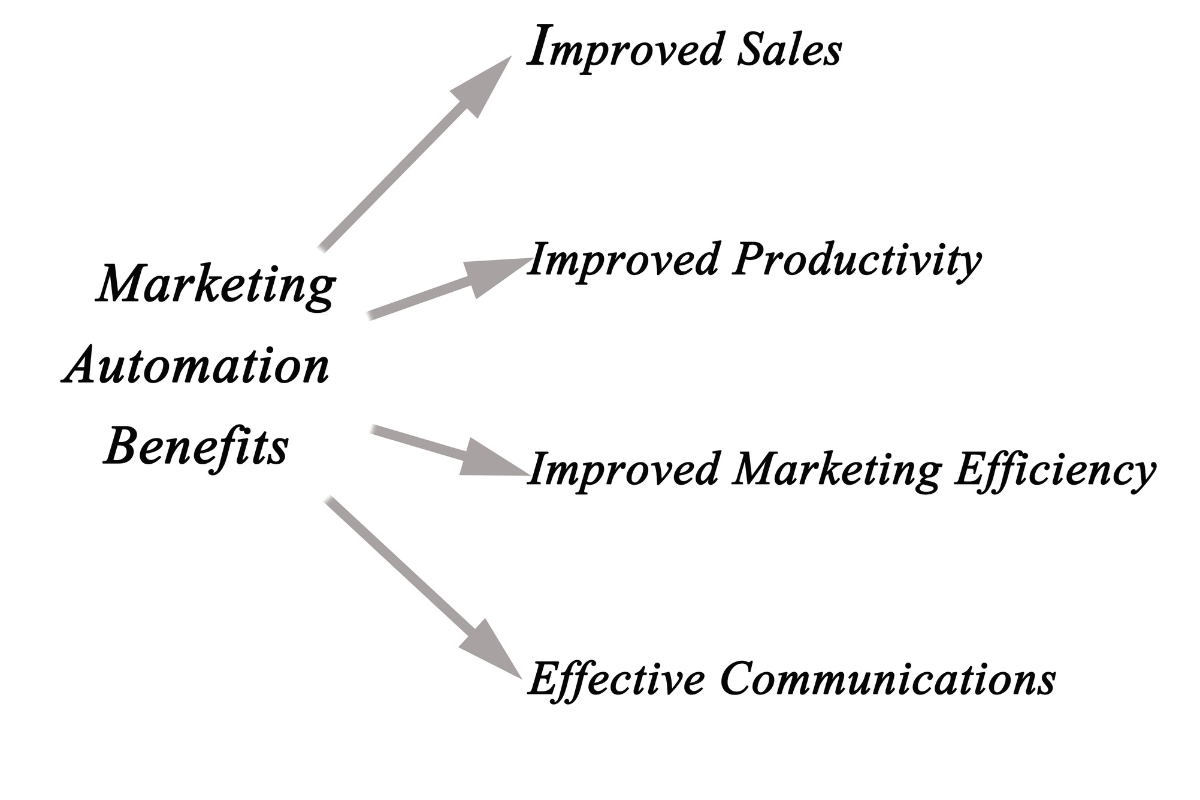
Automation reduces the amount of repetitive manual work required to manage campaigns, customer communications, segmentation, lead management, reporting, and other marketing processes. By establishing automated workflows, businesses can manage larger audiences and more complex campaigns without increasing operational workload at the same rate. This allows marketing teams to redirect more time toward strategic planning, creative development, customer insights, optimization, and other activities that require human judgment.
4. Automation Supports Personalized Customer Experiences
Enterprise marketing automation allows businesses to use customer data to segment audiences and deliver more relevant content, offers, and communications based on customer characteristics and behavior. Behavioral triggers can help businesses respond to actions such as website visits, content engagement, purchases, abandoned interactions, or changes in customer lifecycle stage. For global organizations, this creates opportunities to combine scalable automation with market-specific personalization so customers receive experiences that are relevant to their needs, location, interests, and position in the buying journey.
5. Automation Strengthens Revenue Generation
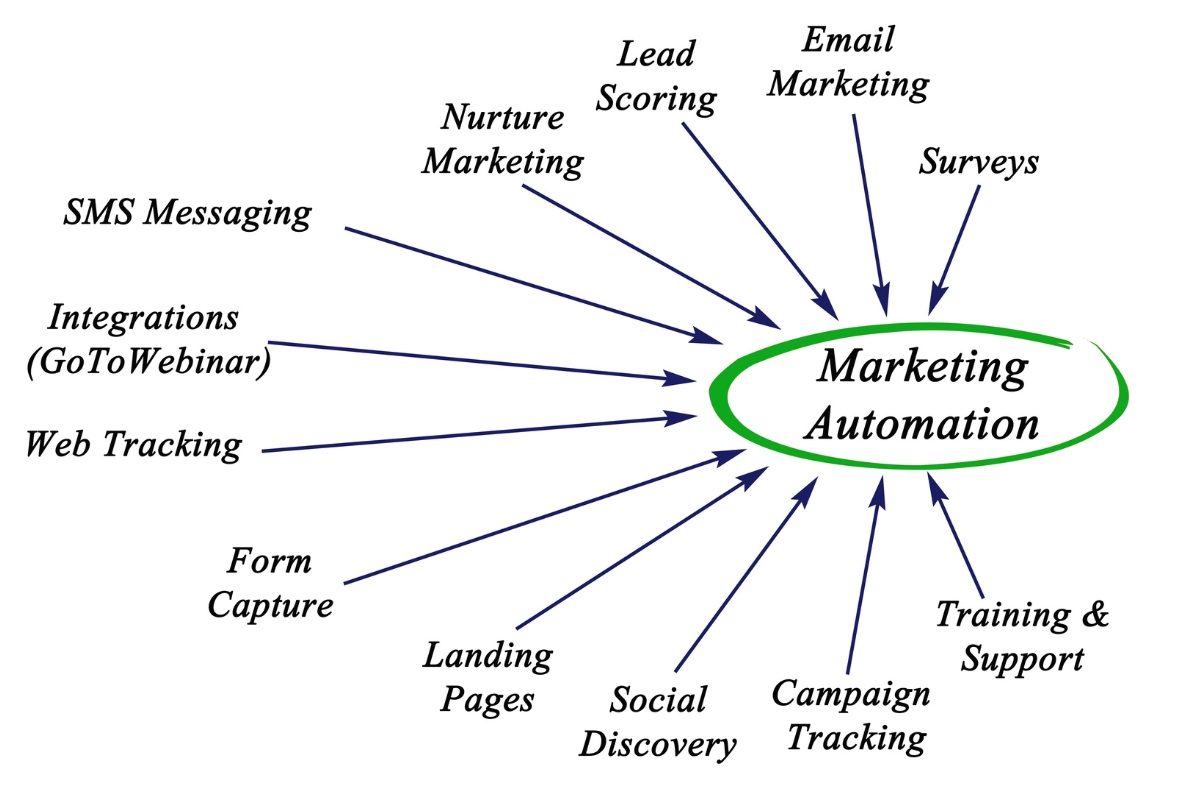
Automation can strengthen revenue generation by helping businesses nurture prospects, identify buying signals, qualify leads, and move potential customers toward conversion more consistently. Automated lead scoring and qualification can help marketing teams identify prospects that demonstrate stronger commercial potential, while CRM integration can connect these opportunities with sales teams and pipeline management processes. When marketing activity is connected to sales outcomes, businesses can improve the movement of qualified prospects through the funnel and create a clearer relationship between automation investment, conversions, and revenue.
Understanding Enterprise Marketing Automation and How It Works
Enterprise marketing automation is the strategic use of technology, customer data, workflows, and integrated marketing systems to manage complex customer acquisition and retention activities at organizational scale. Unlike basic email automation or isolated workflow tools, enterprise marketing automation connects multiple channels, customer data sources, marketing processes, and sales systems to coordinate personalized customer experiences across markets and lifecycle stages. Understanding how these components work together helps CEOs and CMOs evaluate automation as a broader growth infrastructure rather than simply as a tool for reducing manual marketing tasks:
1. Centralized Customer Data and CRM Integration
Enterprise marketing automation relies on connected customer data that gives businesses a more complete view of individual prospects and customers across interactions and channels. Customer profiles can combine information such as contact details, behavioral data, purchase history, engagement, and lifecycle status, while CRM synchronization allows marketing and sales teams to work from more consistent information. This cross-channel visibility helps businesses understand customer behavior, trigger relevant automation, personalize communications, and make better decisions about acquisition, conversion, and retention.

2. Audience Segmentation and Lead Management
Businesses can use enterprise marketing automation to divide audiences according to geographic location, industry, company size, customer value, lifecycle stage, behavior, and other commercially relevant characteristics. These segments allow marketing teams to deliver more relevant communications while lead scoring can identify prospects based on engagement, intent, fit, or other predefined criteria. Automated lead qualification can then help determine which prospects should continue through nurturing and which demonstrate sufficient potential to be transferred to sales teams.
3. Automated Customer Journeys
Automated customer journeys allow businesses to create structured experiences that respond to customer actions and lifecycle stages without requiring manual intervention at every step. These journeys can include welcome communications, lead nurturing, abandoned-interaction follow-ups, post-purchase messages, retention campaigns, and re-engagement sequences designed around specific customer behaviors or conditions. By connecting these workflows to customer data, businesses can deliver timely and consistent communication while adapting the journey as prospects and customers move through different stages.
4. Multi-Channel Campaign Automation
Enterprise marketing automation can coordinate campaigns across email, SMS, website experiences, paid media audiences, social platforms, and other digital touchpoints rather than managing each channel independently. A customer’s interaction on one channel can trigger or influence activity on another, creating more connected experiences throughout the customer journey. This approach enables businesses to manage larger multi-channel campaigns while maintaining greater consistency in messaging, targeting, timing, and customer engagement across different markets.
5. Marketing and Sales Integration
Integration between marketing automation and sales systems helps ensure that qualified prospects move efficiently from marketing engagement into the sales process. Automated lead handoffs, CRM workflows, sales alerts, pipeline visibility, and sales enablement processes can give sales teams relevant information about prospect activity and intent at the appropriate stage. This connection reduces gaps between marketing and sales while helping both teams understand how automated campaigns contribute to opportunities, customer acquisition, and revenue.
6. Analytics, Attribution and Reporting
Analytics and reporting provide the measurement layer needed to determine whether enterprise marketing automation is producing meaningful business outcomes. Businesses can track campaign performance, customer interactions, conversions, revenue attribution, customer acquisition costs, and marketing ROI to understand which workflows and channels contribute most effectively to growth. Executive dashboards can then turn this information into actionable insights, allowing CEOs and CMOs to evaluate performance, improve resource allocation, and optimize automation based on measurable commercial results.
What Challenges Do Global Businesses Face With Enterprise Marketing Automation?
Implementing automation across a global organization can create significant challenges because businesses must coordinate customer data, technology, processes, teams, and compliance requirements across multiple markets. Enterprise marketing automation becomes more difficult when existing systems are fragmented, local teams follow different processes, or employees lack the expertise required to manage complex automated workflows effectively. CEOs and CMOs should understand these challenges before investing in automation so they can address operational and strategic risks while building a scalable foundation for growth:
1. Fragmented Customer Data
Global businesses often store customer information across different CRM systems, marketing platforms, regional databases, websites, and sales systems, making it difficult to create a unified customer view. Fragmented data can prevent automation workflows from accurately identifying customers, understanding behavior, applying appropriate segmentation, and delivering relevant communications. Enterprises need connected data structures and clear ownership of customer information to ensure automation decisions are based on reliable and sufficiently complete data.
2. Complex Technology Ecosystems
Large organizations may use numerous marketing, CRM, analytics, advertising, e-commerce, customer service, and data management platforms that were introduced at different times or by different departments. Connecting these systems can require significant technical planning because incompatible platforms, duplicated functionality, legacy technology, and inconsistent data structures can create integration problems. A well-designed enterprise marketing automation environment should therefore simplify the technology ecosystem where possible while ensuring essential systems can exchange accurate and timely information.
3. Inconsistent Processes Across Markets
Different regional teams may use different approaches to lead management, customer communication, campaign execution, reporting, and sales handoffs, making global automation difficult to standardize. While local flexibility can be important because markets have different customer expectations and commercial conditions, excessive process variation can create duplicated workflows, inconsistent customer experiences, and unreliable performance comparisons. Enterprises need common strategic frameworks and core processes while allowing appropriate local adaptation where market requirements justify it.
4. Data Privacy and Compliance Requirements
Global businesses must consider different privacy laws, consent requirements, data handling practices, and regulatory expectations when automating customer communications across countries. Automation systems can create significant compliance risks if businesses collect, store, transfer, segment, or activate customer information without appropriate controls and permissions. Enterprises should therefore incorporate privacy, consent management, data governance, access controls, and regional requirements into the design of automation workflows rather than treating compliance as an issue to address after implementation.
5. Poor Integration Between Marketing and Sales
Automation can lose much of its commercial value when marketing systems and sales processes operate independently. If qualified leads are not transferred correctly, sales teams lack visibility into prospect activity, or lead definitions differ between departments, automated campaigns may generate engagement without creating meaningful pipeline opportunities. Strong CRM integration, shared definitions, automated handoffs, sales alerts, and common revenue objectives can help connect marketing automation with the wider sales process.
6. Difficulty Maintaining Data Quality
Automation depends on accurate and consistent customer information, yet large databases can accumulate duplicate records, outdated contact details, incomplete profiles, inconsistent fields, and incorrect segmentation data. Poor data quality can cause automated workflows to send irrelevant communications, misclassify leads, produce unreliable reports, or exclude valuable customers from appropriate campaigns. Enterprises therefore need ongoing data cleansing, validation, governance, and monitoring processes to maintain the reliability of automated decision-making.
7. Over-Automation and Loss of Personalization
Automation can become counterproductive when businesses prioritize efficiency at the expense of genuine customer relevance and human interaction. Excessive automated messages, poorly timed communications, repetitive content, and generic customer journeys can make experiences feel impersonal and reduce engagement or trust. Businesses should use customer data and behavioral signals to determine where automation adds value while preserving appropriate opportunities for human interaction, creative judgment, and market-specific personalization.
8. Limited Internal Automation Expertise
Enterprise automation requires expertise across areas such as marketing strategy, CRM management, data architecture, analytics, workflow design, integration, personalization, and campaign optimization. Organizations may have strong marketing teams but still lack the specialized technical or operational capabilities needed to design and manage complex automation systems effectively. CEOs and CMOs should assess internal capability gaps early and determine whether training, specialist recruitment, technology partners, or external agency support is required to achieve the intended results.
9. Difficulty Measuring Revenue Impact
Large organizations can struggle to determine how automated campaigns and customer journeys contribute to pipeline, conversions, revenue, and customer lifetime value when multiple channels and touchpoints influence purchasing decisions. Basic engagement metrics may show that automation is generating opens, clicks, or interactions without demonstrating whether these activities are creating meaningful commercial outcomes. Enterprises need integrated analytics, attribution frameworks, CRM data, and executive-level reporting to connect automation activity with revenue and evaluate whether investment is producing sufficient business value.
10. Managing Change Across Large Organizations
Introducing enterprise marketing automation often requires changes to existing processes, responsibilities, technologies, reporting structures, and ways of working across multiple teams and regions. Employees may resist new workflows, local teams may prefer established systems, and departments may have different expectations about how automation should be implemented and measured. Effective change management requires executive sponsorship, clear communication, employee training, defined responsibilities, phased implementation, and continuous performance reviews so that automation becomes embedded in the organization’s operating model rather than remaining an underused technology investment.
What Opportunities Can Global Businesses Leverage Through Enterprise Marketing Automation?
Mature enterprise marketing automation can create commercial opportunities that extend well beyond reducing repetitive marketing tasks or improving workflow efficiency. When automation is connected to customer data, CRM systems, multiple digital channels, and revenue processes, global businesses can scale customer engagement while improving acquisition, retention, expansion, and decision-making. The following opportunities show how organizations can use automation as a strategic growth capability:
1. Scale Marketing Across Multiple Markets
Enterprise marketing automation enables businesses to coordinate marketing activities across multiple countries and customer segments without requiring every campaign and customer interaction to be managed manually. Global teams can establish standardized workflows, segmentation structures, reporting processes, and campaign frameworks while allowing regional teams to adapt content and messaging to local market requirements. This creates a more scalable operating model that allows businesses to expand marketing activity without increasing operational complexity at the same rate.
2. Build Consistent Global Customer Experiences
Automation can help businesses deliver more consistent customer experiences across websites, email, advertising, sales interactions, and other digital touchpoints. Standardized customer journeys can ensure that customers receive appropriate communications based on their lifecycle stage, while local adaptations can reflect language, market conditions, and customer expectations. Consistency across key interactions can strengthen brand experience while reducing gaps that occur when different markets manage customer communication entirely independently.
3. Improve Lead Nurturing and Conversion
Automated lead nurturing allows businesses to maintain relevant communication with prospects who are not yet ready to purchase while responding to changes in engagement and buying intent. Workflows can deliver educational content, follow-up messages, offers, and sales alerts based on prospect behavior, helping move potential customers through the buying journey more systematically. This can improve the likelihood that qualified prospects progress toward conversion while reducing the risk of valuable leads being lost through inconsistent or delayed follow-up.

4. Increase Customer Retention and Lifetime Value
Automation can support customer retention by identifying lifecycle stages, changes in engagement, purchasing patterns, and potential signs of customer inactivity. Businesses can then trigger onboarding communication, product education, renewal reminders, loyalty campaigns, re-engagement messages, and other retention activities at appropriate points in the customer relationship. By maintaining relevant engagement after the initial purchase, enterprises can strengthen customer relationships and create opportunities to increase customer lifetime value.
5. Improve Cross-Selling and Upselling
Customer data and behavioral signals can help businesses identify opportunities to recommend complementary products, upgraded services, or additional solutions to existing customers. Automated workflows can trigger personalized offers based on previous purchases, product usage, customer characteristics, or demonstrated interests rather than sending the same promotion to an entire database. This creates opportunities to increase revenue from existing customers while making recommendations more relevant to individual needs.
6. Create More Efficient Demand Generation
Automation can connect audience segmentation, content distribution, paid media, lead nurturing, website interactions, and sales processes into more coordinated demand generation systems. Businesses can use behavioral triggers and automated workflows to maintain engagement across longer buying journeys while ensuring prospects receive relevant information at different stages. This can improve marketing efficiency by allowing organizations to manage demand generation at greater scale without relying entirely on manual campaign execution.
7. Strengthen First-Party Customer Data
Enterprise automation creates opportunities to collect, organize, and activate first-party customer information across interactions with the business. Data from websites, purchases, email engagement, forms, CRM records, customer accounts, and other direct interactions can contribute to richer customer profiles when managed responsibly. Stronger first-party data can improve segmentation, personalization, customer retention, measurement, and strategic decision-making while giving businesses greater control over their understanding of customers.
8. Improve Marketing Productivity
Automation can allow marketing teams to manage larger audiences, more complex campaigns, and more customer interactions without increasing manual workloads proportionally. Routine activities such as campaign triggers, lead routing, email sequences, segmentation updates, reporting, and customer follow-ups can be handled through predefined workflows. This enables employees to spend more time on strategic planning, creative development, customer insights, testing, optimization, and other activities that require human expertise.
9. Accelerate Market Expansion
Automation can help businesses test and scale marketing activity when entering new geographic markets or targeting new customer segments. Organizations can create localized campaigns, segment audiences, monitor engagement, nurture prospects, and evaluate conversion performance using structured automation processes rather than building every activity from scratch. The resulting data can provide early evidence about demand, customer behavior, acquisition economics, and market potential, helping executives make more informed expansion decisions.
10. Generate Better Customer and Business Intelligence
Automated marketing systems can collect and connect large volumes of customer interaction data across campaigns, channels, lifecycle stages, and markets. When this information is integrated with CRM, sales, and analytics systems, businesses can identify patterns in customer behavior, campaign performance, conversion, retention, and revenue contribution. This intelligence can help executives understand which customer segments and markets offer the strongest opportunities while supporting better decisions about marketing investment, product priorities, customer experience, and business growth.
What Are the Major Enterprise Marketing Automation Trends Global Businesses Should Understand?
Enterprise marketing automation is evolving as artificial intelligence, customer data, personalization, privacy requirements, and connected digital experiences reshape how organizations manage customer journeys. Global businesses are increasingly moving beyond basic workflow automation toward intelligent systems that can interpret customer behavior, coordinate multiple channels, and support decisions across the entire lifecycle. Understanding these developments helps CEOs and CMOs determine where automation can create competitive advantage, improve customer experiences, and strengthen measurable marketing performance:
1. AI-Powered Marketing Automation
Artificial intelligence is making marketing automation more capable of analyzing customer data, identifying patterns, optimizing campaigns, and supporting automated decision-making. AI-powered systems can help businesses determine which audiences to target, when to communicate, which content to present, and how customers are likely to respond to different interactions. Global enterprises can use these capabilities to manage complex customer journeys at scale while maintaining greater responsiveness and marketing efficiency.

2. Predictive Lead Scoring and Customer Intelligence
Predictive analytics can help businesses evaluate customer and prospect data to identify patterns associated with conversion, retention, purchasing behavior, or customer value. Instead of relying only on manually assigned lead scores, enterprises can use historical and behavioral information to identify prospects with stronger potential and prioritize appropriate marketing or sales actions. This can improve lead qualification, resource allocation, and customer intelligence while helping revenue teams focus attention on opportunities with greater commercial potential.
3. Hyper-Personalized Customer Journeys
Enterprise marketing automation is increasingly enabling businesses to create highly relevant customer journeys based on individual characteristics, preferences, behaviors, and lifecycle stages. Automation can combine customer data with contextual signals to determine which content, offers, messages, or experiences are most appropriate for specific audiences. For global businesses, this creates opportunities to provide personalized experiences at scale while still adapting communications to regional markets and customer expectations.
4. Real-Time Behavioral Automation
Real-time automation allows marketing systems to respond to customer actions as they occur rather than relying solely on predefined schedules or broad audience campaigns. Website visits, content interactions, product views, purchases, form submissions, or changes in engagement can trigger immediate communications, audience updates, or sales notifications. This responsiveness can help businesses engage customers at moments of demonstrated interest and create more timely experiences throughout the customer journey.
5. First-Party Data Activation
Businesses are placing greater strategic emphasis on activating first-party data collected directly through websites, CRM systems, purchases, customer accounts, email interactions, and other owned channels. Enterprise automation can use this information to improve segmentation, personalization, lead management, retention, and customer intelligence while reducing reliance on externally sourced audience information. Effective first-party data activation requires strong data governance, consent management, integration, and responsible use to ensure that customer information remains accurate and appropriately protected.
6. Omnichannel Marketing Automation
Omnichannel automation is connecting customer experiences across email, SMS, websites, advertising platforms, social media, mobile experiences, and other digital touchpoints. Instead of treating each channel as an independent communication environment, businesses can use shared customer data and automated workflows to coordinate interactions across the customer journey. This creates more consistent experiences and allows enterprises to manage complex engagement programs while adapting communication according to how customers interact with different channels.
7. Generative AI for Marketing Content and Workflows
Generative AI is increasingly being incorporated into marketing automation to support content creation, campaign variations, personalization, workflow development, and routine marketing tasks. Enterprises can use these capabilities to produce or adapt content for different audiences and markets more efficiently while accelerating campaign development and experimentation. Human oversight remains essential for maintaining brand standards, factual accuracy, strategic relevance, cultural suitability, and appropriate customer communication.
8. Advanced Marketing Attribution
Advanced attribution is becoming increasingly important as customers interact with businesses through multiple channels and touchpoints before conversion. Enterprise automation platforms can connect campaign interactions, customer journeys, CRM activity, and revenue information to provide a broader understanding of how marketing contributes to business outcomes. More sophisticated attribution can help executives evaluate channel performance, understand conversion paths, allocate budgets more effectively, and identify the combinations of activities that contribute to revenue.
9. Privacy-Centric Automation
Privacy is becoming a core consideration in how businesses design and operate automated customer journeys, particularly when managing data across multiple countries with different regulatory requirements. Enterprises need automation systems that support appropriate consent, data governance, access controls, retention practices, and responsible customer-data activation. Building privacy into automation processes can help organizations reduce compliance risks, protect customer trust, and create more sustainable data-driven marketing operations.
10. Automation Across the Entire Customer Lifecycle
Enterprise automation is expanding beyond lead generation and nurturing to support the full customer lifecycle, including acquisition, conversion, onboarding, engagement, retention, cross-selling, upselling, renewal, and re-engagement. Connecting these stages allows businesses to create continuous customer journeys rather than treating marketing as a series of disconnected campaigns. This lifecycle approach can help global enterprises increase customer value, strengthen retention, improve customer experiences, and connect marketing automation more directly with long-term revenue growth.
What Enterprise Marketing Automation Strategies Should Global Businesses Implement for Sustainable Growth?
Global businesses need a structured approach to enterprise marketing automation that connects strategic objectives with customer data, automated journeys, sales processes, and measurable commercial outcomes. The implementation process should begin with defining what the organization wants automation to achieve before progressing through customer journey design, data integration, personalization, measurement, and continuous optimization. CEOs and CMOs can use the following framework to move from strategic planning to automation deployment, performance improvement, and scalable global execution:
1. Define Business and Revenue Objectives
Businesses should establish clear commercial objectives before selecting automation technologies or designing workflows, including revenue growth, customer acquisition, retention, market expansion, and improved marketing efficiency. These objectives should determine which customer journeys require automation, which processes should be prioritized, and which performance indicators will be used to evaluate success. Establishing this foundation ensures that automation investment supports broader business priorities rather than becoming a technology project focused primarily on operational efficiency.

2. Map Global Customer Journeys
Global businesses should map customer journeys across awareness, consideration, conversion, onboarding, retention, and re-engagement while identifying how these experiences differ between markets and customer segments. This process helps teams identify important touchpoints, customer behaviors, communication gaps, and repetitive activities that could benefit from automation. Understanding the complete journey before building workflows allows enterprises to create automation that reflects actual customer needs rather than simply automating existing processes without considering their effectiveness.
3. Establish a Centralized Customer Data Foundation
A reliable data foundation should connect CRM systems, customer data platforms, websites, transactional systems, marketing channels, and other relevant sources so automation can operate from accurate and accessible customer information. Businesses should establish clear data governance, integration processes, ownership structures, and quality controls to reduce duplication, inconsistencies, and incomplete customer profiles. A centralized and reliable data environment gives automation workflows the information required to segment audiences, personalize interactions, trigger actions, and measure customer and revenue outcomes effectively.
4. Segment Customers and Define Automation Audiences
Businesses should create meaningful automation audiences based on factors such as market, industry, customer value, lifecycle stage, purchasing behavior, engagement, and other commercially relevant signals. Effective segmentation allows automated journeys to respond differently to high-value customers, new prospects, inactive users, qualified leads, and other audiences with distinct needs and objectives. Clear audience definitions also make it easier to personalize communications, establish appropriate triggers, measure performance, and prevent customers from receiving irrelevant or conflicting automated messages.
5. Design Automated Customer Journeys
Enterprises should design automated journeys around specific customer and business objectives, including lead nurturing, conversion, onboarding, retention, cross-selling, and re-engagement. Each workflow should define the appropriate triggers, audience, communication sequence, decision points, timing, desired action, and exit conditions so that customers receive relevant interactions throughout their lifecycle. Well-designed journeys allow businesses to provide consistent experiences at scale while reducing manual intervention and ensuring that important customer interactions are not overlooked.
6. Integrate Marketing Automation With Sales
Marketing automation should connect directly with sales processes so that qualified prospects can move efficiently from automated marketing journeys into appropriate sales engagement. Lead scoring, qualification rules, CRM integration, automated sales alerts, and pipeline tracking can help sales teams identify high-potential opportunities and understand the interactions that influenced prospect behavior. This integration creates stronger accountability between marketing and sales while allowing executives to evaluate how automation contributes to qualified pipeline, conversions, customer acquisition, and revenue.
7. Personalize Automation Across Markets
Global businesses should combine standardized automation frameworks with localized customer experiences that reflect regional language, cultural expectations, market conditions, offers, and customer behavior. Automated journeys can use market-specific data to adjust messaging, content, timing, promotions, and communication channels without requiring the organization to build entirely separate systems for every region. This approach allows enterprises to achieve operational scale while preserving the relevance and cultural context necessary for effective customer engagement in individual markets.
8. Establish Measurement and Attribution
Enterprises should establish measurement frameworks that connect automated activities with customer engagement, conversion, pipeline, revenue contribution, customer acquisition cost, customer lifetime value, and overall marketing ROI. Attribution should provide a practical understanding of how automated journeys and multiple marketing touchpoints contribute to customer outcomes rather than relying solely on basic engagement metrics. Executive dashboards and regular performance reviews can then help leadership identify which automation initiatives create commercial value and where additional investment or optimization is required.
9. Test, Optimize and Scale Automation
Automation should be treated as an ongoing optimization process in which workflows, messaging, timing, audiences, offers, and conversion paths are regularly tested against measurable outcomes. A/B testing, workflow testing, conversion optimization, and structured performance reviews can reveal which journeys generate stronger engagement, conversions, retention, and revenue. Successful automation programs can then be expanded across additional audiences and markets while weaker workflows are refined or discontinued, allowing businesses to scale what works without simply increasing complexity.
What Best Practices Should Global Businesses Use to Maximize Enterprise Marketing Automation Performance?
Sustaining enterprise marketing automation performance requires more than deploying sophisticated technology because global businesses must continuously manage data quality, customer relevance, process consistency, and commercial outcomes. Enterprises should establish operating principles that keep automation aligned with business objectives while allowing teams to maintain control, adapt to market differences, and protect customer trust. The following best practices can help global organizations maintain reliable, scalable, and commercially effective automation programs:
1. Align Automation With Business Objectives
Every automated workflow should have a clear connection to a business objective such as customer acquisition, conversion, retention, revenue growth, or improved operational efficiency. Marketing teams should regularly evaluate whether individual journeys and automation programs are contributing to the outcomes they were designed to achieve rather than measuring success only through activity or engagement. This keeps automation focused on business value and helps executives prioritize resources toward workflows with meaningful commercial potential.
2. Maintain High-Quality Customer Data
Reliable automation depends on accurate, complete, current, and consistently structured customer data across all relevant systems. Enterprises should establish processes for data validation, cleansing, deduplication, enrichment, monitoring, and governance to prevent poor information from triggering inappropriate customer journeys or inaccurate reporting. Maintaining high data quality improves segmentation, personalization, lead management, analytics, and the reliability of automated decision-making.
3. Balance Global Consistency With Local Relevance
Global businesses should standardize core automation principles, processes, technologies, and measurement frameworks while allowing appropriate adaptation for individual markets. Local teams may need to adjust language, content, offers, communication preferences, timing, and customer journeys according to regional behavior and cultural expectations. This balance enables enterprises to achieve operational scalability without creating automated experiences that feel irrelevant or disconnected from local customers.
4. Keep Human Oversight Within Automated Processes
Automation should support human decision-making rather than eliminate appropriate human involvement from complex or sensitive customer interactions. Marketing teams should establish review points for areas such as campaign strategy, AI-generated content, unusual customer situations, high-value leads, compliance requirements, and communications that require contextual judgment. Human oversight helps organizations maintain accuracy, brand consistency, customer trust, and strategic control as automation becomes more sophisticated.
5. Prioritize Customer Experience Over Automation Volume
Businesses should avoid measuring automation success by the number of messages, workflows, or customer interactions generated because excessive automation can create communication fatigue and reduce customer engagement. Each automated interaction should provide a clear purpose and deliver information, assistance, or an offer that is relevant to the customer’s needs and stage in the journey. Prioritizing customer value over communication volume helps enterprises create useful experiences while reducing repetitive, poorly timed, or irrelevant interactions.
6. Integrate Marketing, Sales and Customer Service Data
Marketing automation performs more effectively when customer information is connected across marketing, sales, customer service, CRM, and other relevant business functions. Shared data can help teams understand customer history, lead status, purchasing behavior, service interactions, and lifecycle changes so that automated communications remain coordinated. This integration reduces conflicting messages, improves handoffs, strengthens customer experiences, and gives leadership a more complete view of the relationship between marketing activity and customer value.
7. Continuously Review Automation Performance
Automation programs should be reviewed regularly to determine whether workflows remain relevant, efficient, and commercially effective as customer behavior and business priorities change. Enterprises should monitor conversion rates, engagement, pipeline contribution, revenue, retention, customer acquisition costs, and other relevant performance indicators while identifying workflows that require testing or refinement. Continuous review allows businesses to improve underperforming journeys, remove unnecessary automation, and scale processes that consistently produce stronger outcomes.
8. Maintain Strong Data Privacy and Governance
Global enterprises should build privacy and data governance into automation operations to ensure customer information is collected, stored, processed, and activated responsibly. Clear policies for consent, access, retention, data sharing, security, and regional compliance can reduce risks associated with managing customer information across different markets. Strong governance also establishes greater accountability and helps maintain customer trust while allowing businesses to use first-party data effectively within appropriate boundaries.
9. Document and Standardize Automation Processes
Automation workflows should be clearly documented so teams understand their purpose, triggers, logic, data requirements, owners, dependencies, and expected outcomes. Standardized documentation makes it easier to maintain complex automation environments, train employees, troubleshoot errors, audit processes, and adapt workflows as the organization expands into additional markets. A structured documentation framework also reduces dependence on individual employees and creates greater consistency across global marketing operations.
10. Build Internal Automation Capabilities
Global businesses should develop internal capabilities that allow teams to understand, manage, evaluate, and continuously improve enterprise marketing automation. Training and knowledge development across CRM management, data analysis, workflow design, personalization, analytics, AI, and automation strategy can strengthen organizational independence and improve collaboration with external specialists. Strong internal capabilities also help enterprises make better technology decisions, maintain institutional knowledge, and ensure automation remains aligned with evolving business and customer requirements.
What Does Enterprise Marketing Automation Cost for Global Businesses and What Should Executives Consider?
The cost of enterprise marketing automation varies significantly because global organizations differ in size, customer volume, technology environments, market coverage, workflow complexity, and growth objectives. CEOs and CMOs should therefore evaluate automation as a strategic investment that includes technology, implementation, integration, data management, expertise, and ongoing optimization rather than focusing only on platform fees. The following factors can help executives determine the level of investment required and assess whether automation can deliver sufficient operational efficiency, customer value, and commercial returns:
1. Business Size and Marketing Complexity
The size of the organization and complexity of its marketing operations influence the scale of automation investment required. A global enterprise managing numerous brands, customer segments, campaigns, sales processes, and digital channels may require significantly more sophisticated automation infrastructure than a business with a smaller and simpler customer journey. Executives should assess the number and complexity of marketing processes that need to be coordinated and prioritize investments that address the organization’s most important growth and operational requirements.
2. Number of Markets and Regions
Operating across multiple countries and regions can increase automation requirements because businesses may need localized campaigns, customer journeys, languages, compliance controls, reporting structures, and market-specific integrations. Enterprises should consider whether their automation platform can support centralized governance while allowing regional teams to manage appropriate local variations. Investment should therefore reflect both the technology required to coordinate global operations and the resources needed to maintain relevance across individual markets.
3. Customer Database Size
The size, structure, and complexity of the customer database can significantly affect automation requirements because larger databases require greater capacity for data storage, segmentation, processing, personalization, and campaign management. Enterprises should consider not only the number of contacts but also the volume of customer interactions, behavioral data, lifecycle changes, and records that need to be synchronized across systems. The objective should be to ensure that the automation infrastructure can manage current customer volumes while providing sufficient capacity for future growth.
4. Marketing Automation Platform Requirements
The automation platform itself represents an important component of overall investment, but executives should evaluate functionality rather than selecting a system based solely on licensing costs. Businesses may require capabilities such as customer journey orchestration, segmentation, lead scoring, personalization, multi-channel campaigns, AI features, analytics, workflow management, and regional administration. The appropriate platform should provide the capabilities necessary to support business objectives without introducing unnecessary complexity or functionality that the organization cannot effectively use.
5. CRM and Technology Integration
Integration with CRM systems, websites, e-commerce platforms, analytics tools, advertising platforms, customer service systems, and other technologies can add significant implementation requirements. Enterprises should evaluate the technical work needed to connect these systems and ensure that customer information can move accurately between them. Effective integration can create greater value from automation by providing a connected view of customers and enabling workflows to respond to information across the wider technology ecosystem.
6. Data Migration and Data Management
Moving existing customer information into a new automation environment can require investment in data cleansing, deduplication, restructuring, validation, migration, and governance. Businesses should assess the condition of their existing databases before implementation because inaccurate, incomplete, or inconsistent information can undermine automation performance from the beginning. Ongoing investment may also be required to maintain data quality, establish governance processes, monitor database health, and ensure customer information remains useful for segmentation and personalization.

7. Automation Development and Workflow Complexity
The complexity and number of automated customer journeys can have a major influence on implementation effort and ongoing management requirements. Simple email sequences require fewer resources than sophisticated workflows involving behavioral triggers, multiple decision points, CRM actions, sales handoffs, personalization, regional variations, and lifecycle management. Executives should prioritize workflows according to their expected customer and commercial value rather than attempting to automate every process simultaneously.
8. Internal Team and Specialist Expertise
The organization’s existing skills influence how much investment is required for implementation, management, optimization, and technical support. Businesses with experienced automation specialists, data analysts, CRM managers, marketers, and developers may manage more activities internally, while organizations with capability gaps may require training, recruitment, consultants, technology partners, or external agencies. CEOs should evaluate the total capability requirement and determine the most practical combination of internal resources and external expertise.
9. Analytics, Attribution and Reporting Requirements
Enterprises with multiple markets, channels, customer journeys, and revenue streams may require sophisticated analytics, attribution, dashboards, and reporting systems to understand automation performance. Investment may be needed to connect marketing data with CRM and financial information so executives can evaluate conversions, pipeline, revenue contribution, customer acquisition cost, customer lifetime value, and ROI. Strong measurement infrastructure allows leadership to determine whether automation is producing meaningful commercial value and where further investment should be directed.
10. Expected ROI and Long-Term Strategic Value
The most important investment consideration is whether enterprise marketing automation can generate sufficient value relative to its total cost of ownership and implementation effort. Executives should evaluate potential improvements in marketing productivity, lead conversion, customer retention, customer lifetime value, acquisition efficiency, revenue contribution, and operational scalability rather than focusing only on immediate cost savings. Automation can also create long-term strategic value through stronger customer data, reusable workflows, scalable processes, improved customer experiences, and greater organizational intelligence, making its broader business impact important when assessing the investment.
What Are the Common Enterprise Marketing Automation Mistakes Global Businesses Should Avoid?
Enterprise marketing automation can create significant efficiencies and growth opportunities, but poor strategic decisions can cause organizations to automate ineffective processes, increase complexity, and weaken customer experiences. The greatest risks often occur at executive level when businesses prioritize technology, scale, or activity volume without establishing clear objectives, reliable data, strong processes, and measurable commercial outcomes. Global businesses should therefore avoid the following strategic and decision-making mistakes when developing and managing automation programs:
1. Automating Before Defining Clear Business Objectives
Businesses should not begin automating processes before establishing what they expect automation to achieve for the organization. Without clear objectives around revenue growth, customer acquisition, retention, efficiency, or market expansion, teams may build numerous workflows that generate activity without producing meaningful business value. CEOs and CMOs should define measurable commercial outcomes first and then determine which automation initiatives can contribute directly to those priorities.
2. Choosing Technology Before Understanding Business Requirements
Selecting an automation platform based primarily on features, popularity, or vendor demonstrations can result in a system that does not adequately address the organization’s actual operational and commercial requirements. Executives should first assess customer journeys, data needs, integration requirements, market complexity, internal capabilities, and performance objectives before evaluating technology options. This requirements-led approach helps businesses select technology that supports the operating model rather than forcing existing processes to conform unnecessarily to a platform.
3. Treating Automation as a Replacement for Strategy
Automation can execute processes efficiently, but it cannot replace strategic decisions about customers, positioning, markets, value propositions, channel priorities, or business growth. Organizations that rely on technology without a clear marketing strategy may simply automate large volumes of disconnected activity without improving customer acquisition or revenue performance. Executives should therefore establish the strategic direction first and use automation as an infrastructure for executing and scaling that strategy.
4. Automating Poor or Broken Processes
Automating an inefficient process does not automatically make the process effective because technology can simply make flawed activities happen faster and at greater scale. Businesses should review existing workflows, identify unnecessary steps, remove duplication, and improve customer journeys before deciding which activities should be automated. This ensures that automation supports efficient and customer-focused processes rather than embedding existing operational problems into a more complex technology environment.
5. Ignoring Customer Data Quality
Poor-quality customer data can undermine segmentation, personalization, lead scoring, customer journeys, reporting, and automated decision-making across the organization. Inaccurate, duplicated, outdated, or incomplete records can cause customers to receive inappropriate communications and can also distort performance reporting used by executives. Businesses should therefore treat data quality as a strategic requirement by establishing governance, validation, cleansing, ownership, and ongoing monitoring processes.
6. Creating One Global Workflow for Every Market
Global enterprises can create poor customer experiences when they attempt to apply exactly the same automated journey across markets with different languages, cultures, regulations, customer expectations, and purchasing behaviors. A scalable approach should establish common strategic principles, technology standards, and governance while allowing appropriate regional variations in content, offers, timing, communication, and customer journeys. This enables businesses to achieve global consistency without sacrificing local relevance.
7. Over-Automating Customer Communication
Excessive automation can result in customers receiving too many messages, repetitive content, poorly timed offers, or communications that do not reflect their current needs. While automation is designed to improve efficiency and responsiveness, customer relationships can suffer when businesses prioritize workflow volume over relevance and experience. Executives should establish communication principles, frequency controls, personalization standards, and appropriate human intervention points to ensure automation remains useful rather than intrusive.
8. Failing to Integrate Marketing and Sales
Marketing automation can generate significant engagement without creating sufficient commercial value when marketing and sales operate with disconnected systems, definitions, processes, and objectives. Executives should ensure that lead scoring, qualification, CRM integration, sales alerts, pipeline tracking, and feedback processes connect automated marketing activity with sales execution. Strong alignment allows both functions to understand which automated journeys generate valuable opportunities and how those opportunities progress toward revenue.
9. Measuring Activity Instead of Revenue Impact
Tracking email opens, clicks, workflow completions, website visits, or other activity metrics without connecting them to conversions and revenue can create a misleading view of automation performance. CEOs and CMOs should establish measurement frameworks that connect automated activity with qualified leads, pipeline, conversions, customer acquisition cost, customer lifetime value, revenue contribution, and ROI. Measuring commercial outcomes helps executives identify which automation investments create genuine business value and which require adjustment or discontinuation.
10. Failing to Continuously Optimize Automation
Enterprise automation should not be treated as a one-time implementation that requires little attention after workflows have been launched. Customer behavior, markets, technology, business priorities, acquisition economics, and communication preferences change over time, meaning automated journeys can gradually become less effective or relevant. Regular testing, performance reviews, workflow updates, audience refinement, and conversion optimization allow businesses to improve automation continuously and scale the journeys that consistently deliver stronger customer and commercial outcomes.
Why Partner With SMEPAL Consultancy Agency Limited for Enterprise Marketing Automation?
Enterprise marketing automation requires more than selecting a platform and creating automated workflows; it requires a strategic approach that connects customer data, marketing operations, sales processes, and business objectives. SMEPAL Consultancy Agency Limited helps businesses develop enterprise marketing automation systems designed to strengthen customer acquisition, improve operational efficiency, support multi-market growth, and create measurable commercial value. Our approach combines strategic planning with practical implementation, measurement, and continuous optimization to help organizations build scalable digital growth systems:
1. We Build Marketing Automation Strategies Around Business Objectives
We build marketing automation strategies around the commercial objectives that matter most to the business, including revenue growth, customer acquisition, retention, marketing efficiency, and market expansion. Our strategic planning helps determine which customer processes should be automated, which audiences should be prioritized, and how automation can support wider business and marketing goals. This ensures that enterprise marketing automation functions as a growth capability rather than simply a collection of automated tasks.
2. We Help Businesses Design Scalable Customer Journeys
We help businesses design customer journeys that guide prospects and customers through relevant stages of the buying and retention lifecycle. Our approach can incorporate lead nurturing, lifecycle automation, personalized communication, conversion pathways, onboarding, retention, and re-engagement journeys based on customer needs and behavior. By creating structured and scalable journeys, businesses can deliver more consistent experiences while improving opportunities for conversion and long-term customer value.
3. We Connect Marketing Automation With Customer Data and CRM
We help businesses connect marketing automation with customer data and CRM processes so that marketing teams can make better use of information across the customer lifecycle. Our approach supports data integration, customer segmentation, lead management, CRM workflows, and customer intelligence to create stronger visibility into customer behavior and marketing performance. Connecting these systems can help businesses improve lead qualification, personalize communication, coordinate marketing and sales activity, and make more informed growth decisions.
4. We Support Multi-Market Digital Marketing Operations
We help global and multi-market businesses develop automation structures that provide consistent strategic direction while allowing customer journeys and communication to reflect regional requirements. Our approach can accommodate local market adaptation, regional customer behavior, language, messaging, offers, and market-specific workflows without losing overall brand consistency. This enables businesses to coordinate enterprise marketing automation across markets while creating scalable processes that can support continued international expansion.
5. We Connect Automation Performance With Measurable ROI
We help businesses establish measurement and reporting frameworks that connect automation activity with meaningful commercial outcomes. By examining analytics, attribution, customer acquisition cost (CAC), customer lifetime value (CLV), revenue contribution, conversions, and marketing ROI, executives can gain clearer visibility into the value generated by automated marketing activities. This allows leadership teams to identify high-performing journeys, improve inefficient processes, allocate resources more effectively, and make stronger investment decisions.
6. We Help Businesses Build Sustainable and Scalable Growth Systems
We help businesses develop automation systems that can evolve as customer volumes, markets, teams, and commercial objectives grow. Our approach emphasizes process optimization, continuous improvement, digital capability development, workflow scalability, and performance evaluation so that automation remains effective beyond the initial implementation. By combining scalable processes with ongoing optimization, we help organizations build long-term marketing capabilities that can support sustainable customer acquisition, retention, and business growth.
Frequently Asked Questions About Enterprise Marketing Automation
Enterprise marketing automation involves more than automating individual emails or repetitive marketing tasks because global businesses must coordinate data, customer journeys, campaigns, and teams across complex operating environments. Executives need to understand how automation can improve scalability, customer experience, marketing efficiency, lead management, and measurable revenue performance. The following questions address the key considerations businesses should understand when evaluating and implementing enterprise marketing automation:
1. What is enterprise marketing automation?
Enterprise marketing automation is the use of technology, customer data, workflows, and automated processes to manage complex marketing activities and customer journeys at enterprise scale. It can coordinate activities such as segmentation, lead nurturing, personalization, campaign management, customer lifecycle communication, and performance reporting across large audiences and multiple markets. Unlike basic email automation or isolated workflow tools, enterprise marketing automation connects multiple systems and processes to support coordinated marketing operations and measurable business objectives.
2. Why is marketing automation important for global businesses?
Marketing automation allows global businesses to manage large customer databases, multiple markets, complex buying journeys, and numerous digital channels more efficiently. It can improve consistency across marketing operations while allowing businesses to personalize customer experiences according to regional needs, customer behavior, language, and market conditions. When connected with sales and revenue objectives, automation can also improve lead management, customer retention, operational efficiency, and opportunities for scalable growth.
3. What can enterprise marketing automation automate?
Enterprise marketing automation can support lead nurturing, email communication, customer segmentation, lifecycle journeys, lead scoring, campaign workflows, personalization, reporting, and automated sales notifications. Businesses can create workflows that respond to customer behavior, lifecycle stages, purchases, interactions, or other predefined conditions and trigger appropriate actions. Automation can therefore coordinate repetitive and data-driven marketing processes while helping teams manage larger customer audiences without relying entirely on manual execution.
4. How does enterprise marketing automation improve lead generation?
Enterprise marketing automation can improve lead generation by helping businesses target relevant audiences, capture prospect information, nurture leads, and identify prospects showing stronger purchase intent. Behavioral triggers and lead-scoring systems can help marketing teams prioritize prospects according to engagement, customer characteristics, and actions taken throughout the buying journey. When automation is connected with CRM systems and sales processes, qualified prospects can be transferred to sales teams more efficiently, strengthening the connection between marketing activity, conversion opportunities, and revenue.
5. How can businesses personalize automation across different countries?
Businesses can establish a global automation framework while adapting customer journeys, messaging, content, offers, language, timing, and communication according to individual market requirements. Customer behavior, cultural context, purchasing preferences, regulations, and regional business conditions can be incorporated into localized workflows without requiring the organization to create entirely separate automation systems for every market. This approach allows enterprises to maintain consistent strategic direction and brand standards while delivering experiences that remain relevant to local audiences.
6. How does marketing automation integrate with CRM systems?
Marketing automation can integrate with CRM systems by synchronizing customer information, lead activity, lifecycle stages, qualification data, interactions, and other relevant customer records. This connection can support automated lead management, sales handoffs, alerts, pipeline visibility, and coordinated communication between marketing and sales teams. A connected CRM and automation environment also gives businesses a more complete view of the customer lifecycle, allowing marketing activity to be evaluated against opportunities, conversions, and revenue.
7. How can CEOs and CMOs measure enterprise marketing automation performance?
CEOs and CMOs can measure automation performance using commercial and operational indicators such as qualified leads, conversion rates, pipeline contribution, revenue, customer acquisition cost (CAC), customer lifetime value (CLV), productivity, attribution, and marketing ROI. Executive dashboards can connect workflow and campaign activity with customer and financial outcomes to show which automated processes are creating meaningful business value. This allows leadership teams to evaluate efficiency, identify high-performing customer journeys, control inefficient investment, and make better decisions about scaling automation.
8. Should businesses automate every marketing process?
Businesses should not attempt to automate every marketing process because some activities require strategic judgment, creativity, human interaction, and a deeper understanding of individual customer circumstances. Automation is most valuable when applied to repetitive, scalable, predictable, and data-driven processes where technology can improve consistency and efficiency. Human oversight should remain important for strategic planning, creative direction, complex customer interactions, relationship building, and decisions where context cannot be adequately handled by automated workflows.
9. When should a global business work with an external marketing automation agency?
A global business may benefit from an external marketing automation agency when its technology environment is complex, internal capabilities are limited, multiple markets need to be coordinated, or significant implementation and integration work is required. External expertise can help organizations address platform selection, workflow design, CRM integration, data management, customer journey development, analytics, and optimization without requiring every specialist capability to be built internally. An agency can also provide strategic and implementation support when the organization has ambitious growth objectives but needs additional expertise or execution capacity to achieve them.
10. How can SMEPAL Consultancy Agency Limited help with enterprise marketing automation?
SMEPAL Consultancy Agency Limited helps businesses develop enterprise marketing automation strategies that connect business objectives with customer journeys, data, automation, digital visibility, qualified lead generation, conversions, and measurable ROI. We can support businesses in designing scalable workflows, improving customer journey management, connecting marketing activity with CRM and customer data, and developing measurement frameworks that demonstrate commercial performance. Our approach is designed to help global businesses build sustainable and scalable digital marketing systems that strengthen customer acquisition, improve marketing efficiency, and support long-term growth.

Choose SMEPAL Consultancy Agency Limited for Enterprise Marketing Automation That Drives Global Growth Today!
Global businesses can partner with SMEPAL Consultancy Agency Limited to build scalable automation systems that strengthen customer journeys, qualified lead generation, conversions, and revenue growth. Contact our team for a strategic consultation tailored to your markets, customer lifecycle, technology environment, and business objectives. We can help you connect automation with customer data, CRM, digital marketing performance, and measurable ROI while creating systems designed for sustainable global growth. Contact SMEPAL Consultancy Agency Limited today to discuss your enterprise marketing automation requirements and start scaling your digital growth.